
التصنيف: غير مصنف

  • Why We Had to Wait 10 Years for the ‘Wolf Hall’ Sequel

    Why We Had to Wait 10 Years for the ‘Wolf Hall’ Sequel


    As streamers demand global appeal, the producer behind Wolf Hall and All Creatures Great and Small is betting on specificity. Photo-Illustration: Vulture; Photo: PBS

    Wolf Hall was one of the year’s biggest artistic triumphs when it premiered in 2015. In addition to generating huge ratings in both Britain and America, the BBC-PBS adaptation of Hilary Mantel’s Booker Prize–winning novels scored near-universal critical acclaim, a Peabody Award, Golden Globe and BAFTA wins for Best Limited Series, and no less than eight Emmy nominations. To some, it might seem surprising that a six-hour period drama about the political machinations of Thomas Cromwell and Henry VIII in 16th-century England would end up such a smashing success — and lead to an equally acclaimed follow-upThe Mirror and the Light, which premieres in the U.S. this Sunday on Masterpiece. But for Wolf Hall executive producer (and former HBO Films chief) Colin Callender, the show’s success was just a case of history repeating itself.

    Back in 1983, the British-born Callender found himself sitting in the audience at the Pasadena Civic Auditorium for the 35th-annual Emmy Awards. Joan Rivers and Eddie Murphy were the hosts, and Callender was there because of the seven nominations for his adaptation of The Life and Adventures of Nicholas Nickleby. The project, which ran in syndication here in the States, was up against a pair of ABC blockbusters. “Back then, the miniseries was the last award of the night,” Callender says. “As the evening progressed, every nomination got knocked down. So by the time it got to Best Miniseries, I had given up and completely assumed that it was going to go to The Winds of War or the Richard Chamberlain show The Thorn Birds.” And yet against all odds, Nickleby ended up taking home the gold. “When the announcement was made, I just sat there,” Callender recalls. “My guest dug at me in the ribs, and she said, ‘They just mentioned your name.’ And I looked up and hadn’t actually realized that we won. It was a bit of a shock.”

    Nickleby’s triumph foreshadowed what would become the hallmarks of Callender’s five-decade (and counting) entertainment career: finding success in unexpected places, leaning into changing business models, and doing so with the kind of prestige programming that most platforms reject for not being “commercial” enough. Just three years after his very good night in Pasadena, Callender traded London for New York to run HBO Showcase, the network’s newly formed East Coast movie unit that in 1990 earned the network its first Emmy wins in a drama category. It was the start of a storied two-decade run making movies and miniseries under various HBO banners as part of the network’s “It’s Not TV — It’s HBO” era.

    During his time at the company, Callender’s projects — with titles such as Angels in America, Elizabeth I, Grey Gardens, John Adams, and Temple Grandin were honored with nearly 500 Emmy nominations and 140 statuettes. And long before Netflix and Amazon were getting Oscar nominations, HBO under Callender produced films that played first in theaters and snagged awards (and, in some cases, big box-office returns), including My Big Fat Greek Wedding, Real Women Have Curves, and, through a joint venture with New Line Cinema, Oscar winner Pan’s Labyrinth

    After Callender’s time at HBO ended in late 2008, he returned to his producing roots, launching his Playground banner in 2012. With offices in New York and London, the company is involved in film development and has been very active in theater (Dear Evan Hansen, Harry Potter and the Cursed Child.) But in a throwback to the start of Callender’s career, Playground — with day-to-day operations overseen by joint managing directors Scott Huff and David Stern — has had its biggest success pairing up U.S. and U.K. networks for TV co-productions. Aside from Wolf Hall, Playground is also a producer of the hit PBS–Channel 5 hit All Creatures Great and Small, which just wrapped season five last month and has been renewed for a sixth. All told, the company has produced over 120 hours of television over the past dozen years, including The White Queen and new takes on Little WomenKing Lear, and Dangerous Liaisons, with more in the hopper, like a fresh adaptation of the classic detective series Maigret for PBS and the company’s first move into more comedic material with the Chris O’Dowd–created Small Town, Big Story.

    Prestige drama with distinctly U.K. roots remains the driving passion for Callender and one he is dedicated to preserving, particularly now, when British newspapers are filled with headlines about increasing woes in the U.K. television industry as streamers push for programming with global appeal rather than the very British stories nurtured by the BBC and Channel 4. Callender believes the success he had with Nickleby more than 40 years ago was in no small part because it was a “quintessentially British” production — and not an Americanized take on U.K. society à la Bridgerton or a British series aimed at a global audience, such as The Crown. “The fact that a nine-hour Dickens show won against those big-budgeted, mainstream miniseries, I think, was an indication of what British programming does in the U.S.: It complements,” Callender told me last week during a wide-ranging, hourlong conversation. “It doesn’t try to compete and be a Winds of War or a Thorn Birds. It provides the audience with something different from the mainstream.”

    So there’s a lot I want to talk about given your career, but let’s start with what’s coming up next, Wolf Hall: The Mirror and the Light. The original series was a big success in 2015, both here and in the United Kingdom. I know there were some obvious reasons it took a decade for this follow-up to get made, starting with the fact that you needed to wait for Hilary Mantel to release the book in 2020. What else contributed to the decadelong gap?
    Two things. Firstly, we had to work around everyone’s availability because we wanted to bring back as many of the cast as possible. So the combination of that, of COVID, of the time that Hilary took to write the book, and then the time it took for us to adapt it — all that added up. The real challenge was that the production basically cost 100 percent more than it did the first time round, ten years later. Production costs in the U.K. have escalated exponentially, but the fees that the BBC and the other broadcasters in the U.K. pay haven’t increased in the same way.

    “Maybe all the British dramas that have been successful in America were made first and foremost for the British audience,” says Colin Callender. Photo: Alan Chapman/Dave Benett/WireImage

    We were very lucky to have the BBC and Masterpiece attached to the project. In both cases, they stepped up in a very considerable way to help us make it. But it was a challenge. And Wolf Hall, in many ways, is an embodiment of the challenge that British producers face right now producing high-end drama that is primarily addressed to a British audience: Budgets have gone up, and the license fees that the broadcasters paid have not gone up, and it’s difficult to find co-production partners in the U.S. for certain types of English dramas.

    Another reason that organizing the schedule was complicated is that the show is shot entirely on location. There were no studio builds. We were shooting in authentic Tudor buildings, many of which were part of the National Trust. And a lot of them have an enormous number of tourists coming to visit, so we had to schedule our shooting in the offseason. That constrained our ability to find a slot where everybody was free because it effectively meant we had to shoot in either spring or late fall and early winter.

    Hilary Mantel was involved in helping guide production of the first season, but she sadly died in 2022, before you started filming. Did that make this shoot even more challenging?
    It raised the stakes for us because we really then felt even more strongly that we needed to produce a show that honored her work and that she would’ve blessed. Peter Kosminsky, the director, and Peter Straughan, the writer, did spend a considerable amount of time with Hilary when she was alive, talking about the book and discussing her approach to the telling of the story. And Peter Kosminsky had extensive emails with her. So by the time she died, as sad as it was, I think both Peters felt that they had a real understanding of what Hilary had intended with the book.

    I would gather that one upside to the long time gap between installments of Wolf Hall is that TV technology has gotten so much better since the mid-2010s. Did that come into play when making The Mirror and the Light? One complaint some viewers had about the original was that, because you shot with natural light, it was often difficult to see certain scenes. Did that get better this time around?
    One of the great benefits of shooting ten years later is that the quality of the digital cameras has advanced dramatically. So they are able to shoot in lower light in a way that the cameras back ten years ago weren’t able to. We were very aware that that was a concern for certain viewers the first time round. But I think I can say with enormous confidence that although light and darkness are part of the cinematic palette here, it has been shot very carefully so that you can always see the important information onscreen. I genuinely think the show looks quite beautiful. I don’t think anyone will have any of the problems this time round that some had the first time.

    In the decade since Wolf Hall debuted, streaming has undeniably led to more British programming finding its way to U.S. audiences, whether via Acorn TV and BritBox or the originals on bigger platforms such as Netflix and Prime Video. But for a while now, you’ve been warning that streaming represents a threat to U.K. producers. You recently told the U.K. Parliament that streamers “are interested in using British talent to make American programming” and that is making it harder to finance shows aimed first and foremost at British audiences. Other producers have echoed your fears. Can you explain a bit more why you’re concerned?
    What we need is a multifaceted television landscape with various different broadcasters, platforms, and cable companies living side by side and complementing each other. As part of that, it’s very important for the British television industry that the public-service broadcasters are healthy, well funded, and free to make the shows they want to make. I think what the streamers have done is extraordinary, and they have indeed funded a whole number of British shows.

    But all the talent in those British shows — all the writing, directing, and acting talent — were formed, were shaped, were evolved from working within the British television industry, which is a mix of public-service broadcasting supported by a license fee and ad-supported. So as the world changes, it’s important that we find a way to structure the funding of the BBC and Channel 4 in particular so that they survive in this very competitive marketplace. Because they do make shows that would not otherwise be made by the streamers, that are aimed ostensibly and primarily at British audiences. And if those shows weren’t made, I think the television landscape, certainly in the U.K. but also in the U.S., would be diminished.

    Netflix in particular seems to want its biggest British shows to be able to work in America and the rest of the world as much as it wants them to play in the U.K. Something like Baby Reindeer is British-made, but its themes are universal. It sounds like what you’re saying is that’s fine, but there needs to be more British shows that aren’t engineered for global appeal — even if they ultimately attain it.
    Some of the most successful British dramas in America — maybe all the British dramas that have been successful in America — were made first and foremost for the British audience. They were shamelessly parochial and specific to a time and place in the U.K. And this is true not just of dramas; it’s true of comedy and of music. Whether it’s Monty Python; whether it’s the Beatles; whether it’s Benny Hill; whether it’s Upstairs, Downstairs; whether it’s Downton Abbey; whether it’s my Nicholas Nickleby — those have all been sort of quintessential British works. They have done extremely well in the U.S. and the rest of the world, but they weren’t designed for the U.S. or the rest of the world. So I believe in that model. And that’s what we’ve tried to do with Playground: With the streamers making what they’re making, find the opportunities — the gaps in the market — and deliver programming that otherwise might not get made.

    Do you think the original Wolf Hall would get green-lit by the BBC and PBS in the media world of 2025? Would they be able to devote the resources to it?
    If you’re saying “Would the first Wolf Hall be made at today’s prices in the world today?,” it would be very hard. And particularly bear in mind that when Wolf Hall was made the first time round, Mark Rylance, who was an extraordinary theater actor, maybe our finest British stage actor in decades — he did not have a big screen profile over here in the U.S. But nonetheless, the BBC supported that casting. They even waited about nine months for his availability to become free so we could shoot it with him. But I think if we had another actor who didn’t have an above-the-line profile as the lead, and we tried to finance it now, it would be very, very difficult.

    Peter Kosminsky, your director on Wolf Hall, has called for a 5 percent levy on U.K. subscriptions to U.S. streamers with the goal of using that money so the BBC and other broadcasters can still make the same number of high-end U.K. dramas they’ve always made. Do you agree with that idea?
    Well, that financial arrangement exists all over Europe. I think there are 15 or 16 — I don’t know how many actual countries in all — that have some sort of arrangement like that. It is the case that there are a slew of dramas that the BBC wants to make that it can’t fund. And if this was a way to help fund those shows without damaging in any way the streamers, I think that would be a fine thing to do.

    Perhaps because of what you see happening to the U.K. market, your company, Playground, lately seems to be working in a bigger sandbox, if you will. You have series set up at Peacock and BritBox, and several of the shows on your production roster are very different from Wolf Hall and All Creatures. Has this been a deliberate effort to widen your portfolio?
    We made a decision a couple of years ago that we wanted to broaden the range of the shows we were doing beyond the classic period dramas. So The Undeclared War for Channel 4 and Peacock is contemporary. Our adaptation of Maigret is contemporary. The series version of Inspector Lynley is contemporary, as is Small Town, Big Story. And in that last case, we went one step further and dipped our toe in comedy, or at least it’s a comedy drama. So, yes, there was a concrete decision to broaden the range of the work that we’ve been doing … For all the challenges that are out there, there are also opportunities, and I think that we’ve looked to find those opportunities.

    Even after so many years of making TV, you want to keep evolving, I guess. Or maybe have to is the better phrase.
    My career has, in many ways, been defined by change. Nicholas Nickleby was contract 001 at Channel 4 in the U.K., the very first independent drama to be produced by them. Before Channel 4, everything in the U.K. was produced either by the BBC or ITV, and it was all produced in-house and they owned the shows. What we did in 1978 was create a company called Primetime, where we acquired books, developed them into series, presold them to various territories overseas, and then took them to the BBC and ITV. They made them, but we as Primetime owned the rights in the rest of the world. So with Nicholas Nickleby, we were able to presell it to the U.S. and to a German distributor and then go to Channel 4 and say, “Look, this is what it’s cost. We’ve got three-quarters of the money already. You only need to be in for the remaining quarter.” And that’s how it happened. It was literally contract 001, and it was a real inflection point in the British industry.

    You had a role in another shift in the industry during your time at HBO. You took a job there in 1986 and went on to essentially create what became the network’s prestige-movie division. There were obviously many examples of great made-for-TV movies and miniseries before then. But I would argue the work you and your various teams did at HBO demonstrated that films produced by a “TV company” could consistently be the equal of what was released in theaters.
    When I went to HBO, it was bubbling away, but it hadn’t boiled over yet. We were right in the middle of HBO changing the television landscape. And then by 2003, we had Al Pacino, Meryl Streep, and Emma Thompson, directed by Mike Nichols, in Angels in America. We won the Palme d’Or in that same year with Gus Van Sant’s film Elephant. We were really in the business back then of bringing movie stars and directors — John Frankenheimer, Norman Jewison, Sidney Lumet — to work for us. At the time, the studios had sort of stepped back from producing those big dramas, and we filled that gap at HBO Films.

    All Creatures Great and Small. Photo-Illustration: Vulture; Photo: PBS

    So what do you say to those who think movies produced by streamers are somehow not the equal of those that get released in theaters? I want movies to be released in theaters, too, and some of your HBO Films titles, like Elephant, played in theaters first. But if a film is well done, with a good script and great actors, isn’t that more important than the platform on which it’s released?
    Oh, I completely agree. But, but — they have to be marketed. The audience has to know they’re there. What we were doing back then at HBO is very different to what’s going on now. There’s so much material, and I think the streamers are relying on audiences just finding shows.

    Right — curation matters. HBO used to release movies every Saturday or Sunday night, and when it did an original once every four to six weeks, there was a huge ad campaign behind it. We in the audience knew it was something important. That’s the difference, right?Absolutely. That’s exactly what happened back in those Camelot days.

    You’re very diplomatic, but let me ask you this: During the past five or ten years, it’s often felt like streamers were rushing to try to emulate the HBO prestige-TV model — but the way they did that was to throw a lot of money at projects and sign big names. And yet the end result has rarely felt like the best of what HBO so often does. What do you make of this disconnect?
    I certainly don’t think there’s a correlation between spending a lot of money and the producing of great television. All Creatures Great and Small has an extraordinary following in the U.K. and the U.S. and it costs shillings on the dollar. I won’t embarrass myself by admitting how little it’s made for, but trust me: It’s an accounting error compared to most other big streaming series. If you think about Baby Reindeer, or even going back to Fleabag, the success of those shows wasn’t a function of how much money was spent on them. So I don’t think there’s any correlation between the amount of money spent on a show and its success.

    I think that the key to great television is great development. One of the things that we did at HBO that made us successful is that we were very good at developing shows with creative talent. And I like to think as a producer, and as a company — Playground — we are very good at developing shows. We can lean into the unique qualities of the underlying material and bring them out on the screen and have the dramas informed by the ideas that make that IP in the first place interesting.

    That’s certainly what we did with All Creatures, with Wolf Hall, with Maigret, and it’s in a completely different arena, but it’s what we did with Harry Potter and the Cursed Child onstage. There’s a lot of good stuff on TV. But I think that careful and meticulous development is right at the core of great television.

    Before we finish up, I have to ask about All Creatures Great and Small. Are you ever surprised by the depth of emotion for the show among U.S. audiences? There seems to be so many fans who are under 35, which is not how we in the U.S. often think of the demos for PBS programming?
    First of all, the three central characters are that age — they are young. And we’re watching them trying to get through the day with dignity and facing all the challenges that people face when they’re starting out in their careers or relationships, and so on. So I think there’s a real honesty and humanity to the stories and the characters. And I think the story embraces the small moments, the micromoments that actually we all can relate to.

    There’s a scene in the Christmas special of season one where Mrs. Hall, who’s gone to church on Christmas Eve, is missing her son and she begins to cry. And then Siegfried comes into the church late, sits next to her, clocks that she’s crying, and he puts his hand on her hand. That profoundly simple gesture — that micromoment — carried with it an enormous depth and sense of caring, of humanity, of helping one’s neighbor. And I like to think that the show is populated with moments like that, which we all can relate to. It has a profound humanity to it, and I think that speaks to people.

    Is this the kind of series you think could go on for another decade? Is there any sort of timetable for how long you see it continuing?
    No, there’s no clear end date. I think the answer, frankly, is we’ll go on as long as we can keep making a good series. One of the things I’m proud of is that I think that each season, in its own way, has gotten better and better as we dig more deeply into all the characters and the struggles and the challenges that they face. And I like to think that every season has taken those characters further than before. So I think the answer is we’ll continue as long as we don’t start repeating ourselves. And we certainly haven’t so far, so I’d like to think that we’ve still got a lot more to tell.

    See All

    Source link
  • UFO Doc The Age of Disclosure Screened on Capitol Hill

    UFO Doc The Age of Disclosure Screened on Capitol Hill

    President Trump Meets With Visiting Hungarian Prime Minister Viktor Orban

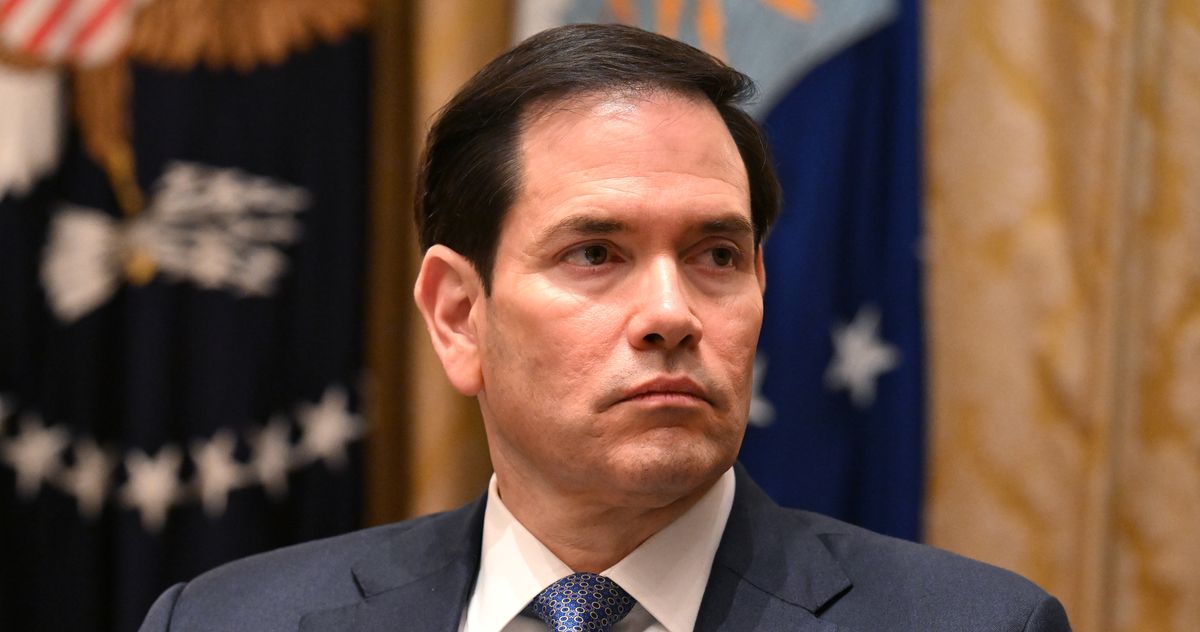
    State Sec. Marco Rubio is one of the talking heads in The Age of Disclosure.
    Photo: Roberto Schmidt/Getty Images

    Tom DeLonge stays vindicated. UFO doc The Age of Disclosure got a special screening on Capitol Hill ahead of its streaming premiere. The film by Dan Farah played in a committee room Monday, according to the New York Times. The Age of Disclosure premiered at SXSW this year, and comes to theaters and VOD Friday. In it, 34 current and former “senior members of government, military and intelligence groups” speak on what the film claims is an 80-year conspiracy to hide evidence of nonhuman intelligence. You know, aliens. The doc says there has been an “80-year global cover-up of non-human intelligent life and a secret war among major nations to reverse-engineer advanced technology of non-human origin.”

    Secretary of State Marco Rubio is one of the most prominent officials who participated in The Age of Disclosure. He discusses the repeated phenomena of something flying over nuclear facilities, “and it’s not ours. And we don’t know whose it is.” Other talking heads in the doc include former Director of National Intelligence James Clapper and Senator Kristen Gillibrand. Speaking to Entertainment Weekly, director Farah says it’s only a matter of time before a sitting president blows the lid off the whole thing. “I think it’s only a matter of time before the release of this film is followed by a sitting president stepping to the podium and telling the world, ‘We’re not alone in the universe,’” he says. “It’s the most significant moment a leader could possibly have.” Considering all the UAP disclosures we’ve seen in the last few years, would it really be that significant? neither NBC News put it, “People online don’t seem to care either way.”

    Source link

  • Fort Worth Zoo welcomes calves and cubs this fall – NBC 5 Dallas-Fort Worth

    Fort Worth Zoo welcomes calves and cubs this fall – NBC 5 Dallas-Fort Worth

    It’s been a busy fall at the Fort Worth Zoo with baby animals making their debuts in September and October.

    A pair of sibling cubs on Sept. 9; an Asian elephant calf on Sept. 26 and a giraffe calf on Oct. 31. The zoo considers each birth a conservation success.

    “Debut is crazy. People just, they pile in. And, you know, it’s too wonderful. Baby anythings, right, are adorable. We’ve had a birth in each of the new habitats this fall. So I think everybody’s pretty happy with their lives,” said Ramona Bass, the zoo’s philanthropist, visionary and champion for 40 years.

    She often tells the story about the first time she saw the Fort Worth Zoo. It was 1983 and she was on a date with her fiancé, Lee Bass. What she saw horrified her and her soon-to-be husband encouraged her to do something about it.

    “It’s been my life’s work and it’s given me so much joy. Thank God for the Fort Worth Zoo. So, I found my calling early and I’m so thrilled that I did,” she said. “I would like to share that I have the most marvelous husband who’s very quiet and very shy and stays out of the limelight. But he has supported me the whole way through this. And I couldn’t have done it without him at all.”

    She started by recruiting a group of native Fort Worthians to her cause, most notably the Tennison family. The group reestablished the Fort Worth Zoological Association and created a new board of directors and executive committee.

    In 1990, the association approached the zoo’s owner, the city of Fort Worth, about creating a public-private partnership to manage the zoo. The deal was signed in 1991 and Bass got even busier raising money and awareness of the zoo.

    Changes and recognition seemed to come every year, the zoo’s reputation for conservation and education grew and a million visitors a year followed.

    “Having people love wildlife is the first step in having them want to take care of it. That’s really the plan,” she said.

    In 2016, the zoo announced a Wilder Vision, a $130-million capital campaign and master plan. It was the single largest fundraising effort in Fort Worth Zoo history. Nearly a decade later, three of four new habitats on the list are done. And it’s in those three habitats where the babies debuted this fall.

    The African Savanna is home to Pancake. At 5’8″, he’s the zoo’s smallest giraffe calf. So the staff considered him a short stack.

    Elephant Springs is the expanded habitat for the zoo’s elephant herd. It’s a popular spot with the arrival of Lady Birdthe zoo’s first Asian elephant calf since 2013.

    Predators of Asia and Africa features some of the most skilled hunters of the animal kingdom and a pair of sibling lion cubsImara, the female, and her brother Tamu.

    The fourth and final phase of A Wilder Vision is targeted to open in 2027. Forests and Jungles of the World will transform the heart of the zoo right before Texas Wild!, which was Bass’ first project.

    An animal found only in the deepest parts of the Democratic Republic of Congo rainforests will live there – the okapi.

    “They look like sort of half giraffe, half zebra. They’re dark with stripy legs and they’re fascinating, beautiful creatures,” Bass said. “We’re very excited.”

    Two more species are on the way, too, by popular demand. A rodent called a capybara is in the plan.

    “It’s a funny little creature from South America, and apparently it’s all the rage with young people,” Bass said. “And, when we ask people to tell us what this zoo was missing. What did they wish we had? They answered a sloth. And, so we’re adding a sloth.”

    Credit social media and viral moments for the request and a zoo champion with a wild vision willing to make it happen.

    “I’m always like, OK, what’s next, what’s next, what’s next? Get it done. And every once in a while, I do have to look around and say, ‘Wow, we’ve really done something special here,’” Bass said.

    Source link

  • America’s Hotels Are Feeling the Shutdown’s Sting

    America’s Hotels Are Feeling the Shutdown’s Sting

    The US government shutdown is gutting hotel bookings.

    The hotel industry is estimated to have missed out on more than $1.2 billion in revenue since the start of the shutdown, with about 186,000 rooms sitting empty every night, according to new research.

    The prolonged shutdown — the longest in US history and now in its sixth week — is estimated to cost the industry about $31 million per day in activity that would typically be generated by hotel stays.

    This analysis was put together by the hospitality platform OysterLink and is based on data from the American Hotel and Lodging Association (AHLA), a trade group representing the industry. Business Insider could not independently verify this figure.

    A growing strain on the travel economy

    OysterLink’s analysis found that the industry has missed out on the equivalent of 6.7 million unbooked room-nights since the shutdown began.

    “Every day the government remains closed, hotel operators, especially small and independent ones, face the risk of losing momentum just as travel demand typically picks up,” said Milos Eric, cofounder and general manager of OysterLink, in an earlier press release.

    The decline in bookings is being driven by multiple factors tied to the shutdown.

    Thousands of flights have been canceled after the Federal Aviation Administration (FAA) ordered airlines to cut 10% of flights at 40 major US airports, disrupting both business and leisure travel.

    Meanwhile, federal travel programs remain suspended, eliminating a key stream of government-related hotel bookings.

    And with hundreds of thousands of federal workers unpaid or furloughed, consumer confidence and discretionary travel spending have taken a hit — a blow that extends well beyond Washington.

    The AHLA, which represents more than 30 industry associations nationwide, warned last month that the shutdown had already cost hotels around $650 million in lost business by October 22.

    Rosanna Maietta, AHLA’s president and CEO, said in an earlier statement that the shutdown was having “a devastating impact” on the industry.

    “Economic uncertainty and waning consumer confidence are translating into booking cancellations and discouraging future planning — especially as we head into the heart of the holiday travel season,” she said.

    The US hotel industry contributes $894 billion to the country’s GDP annually and generates more than $85 billion in state, local, and federal taxes, according to the AHLA.

    The association estimates that hotels support about 2.1 million direct jobs and nearly 9 million total jobs across the broader travel economy.

    With each passing day, that economic engine sputters further — and the industry’s calls for Congress to end the shutdown are growing louder.

    “Hotel owners are on the front lines of America’s economy — and every day this shutdown continues, it puts more small businesses and jobs at risk,” said Kamalesh (KP) Patel, chairman of the Asian American Hotel Owners Association, in the AHLA statement.

    Source link

  • Trump Says DOJ Should Probe Jeffrey Epstein and JPMorgan, Reid Hoffman

    Trump Says DOJ Should Probe Jeffrey Epstein and JPMorgan, Reid Hoffman

    President Donald Trump said Friday he would ask the Justice Department to conduct an investigation into the connections between the now-dead pedophile financier Jeffrey Epstein and JPMorgan Chase, as well as several of his perceived political enemies.

    On Social Truth, Trump compared the Epstein scandal to the “Russia Scam, with all arrows pointing to the Democrats.”

    “I will be asking AG Pam Bondi, and the Department of Justice, together with our great patriots at the FBI, to investigate Jeffrey Epstein’s involvement and relationship with Bill Clinton, Larry Summers, Reid Hoffman, JP Morgan, Chase, and many other people and institutions, to determine what was going on with them, and him,” he wrote.

    A spokeswoman for JPMorgan said the bank regrets doing business with Epstein, a relationship that ended in 2013.

    “We regret any association we had with the man, but did not help him commit his heinous acts,” JPMorgan spokeswoman Patricia Wexler said.

    Angel Urena, a spokesperson for Clinton, said Epstein’s emails discussing Clinton, recently made public, “prove Bill Clinton did nothing and knew nothing.”

    “The rest is noise meant to distract from election losses, backfiring shutdowns, and who knows what else,” Urena said.

    Representatives for Hoffman and Summers did not immediately respond to requests for comment.

    Bondi said she asked Jay Clayton, the US Attorney for the Southern District of New York, to handle the probe.

    “I’ve asked him to take the lead,” Bondi wrote on X, formerly Twitter. “As with all matters, the Department will pursue this with urgency and integrity to deliver answers to the American people.”

    The Manhattan-based prosecutors’ office oversaw the 2019 prosecution of Epstein, who killed himself in jail while awaiting trial. It also brought charges against Epstein’s associate, Ghislaine Maxwell, who was found guilty and sentenced to 20 years in prison.

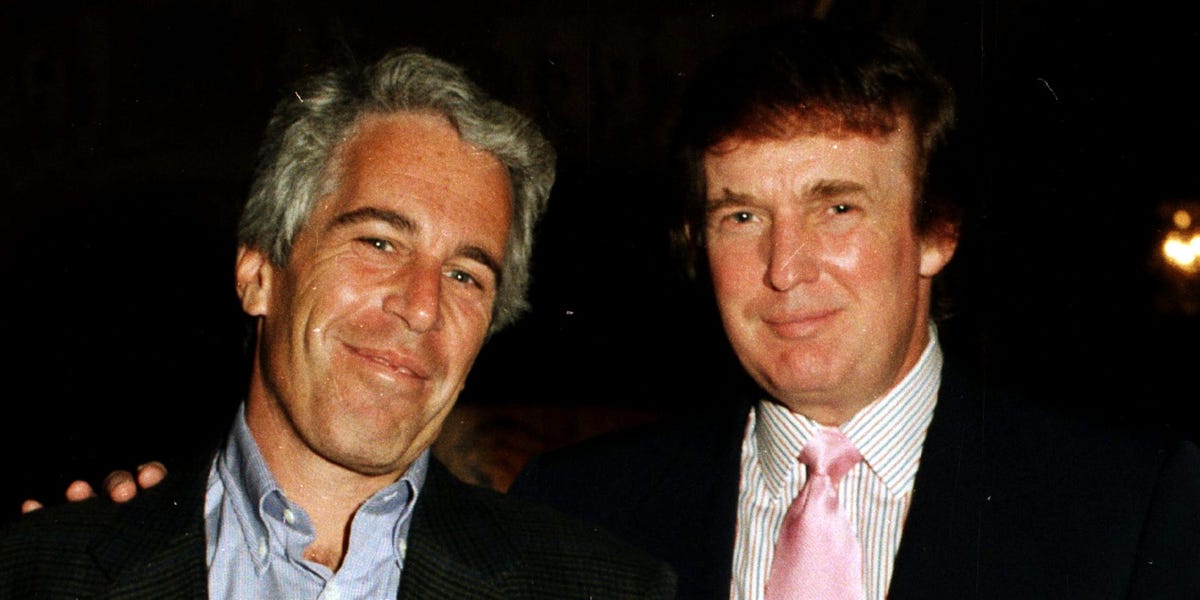
    Trump’s directive comes on the heels of the House Oversight Committee releasing a cache of over 20,000 emails it obtained from Epstein’s estate, some of which included references to Trump. The two were friends in the 1980s and 1990s, and ran in the same Manhattan and Palm Beach social circles, before falling out in the mid-2000s.

    The Trump administration has yet to fulfill promises made by DOJ officials, including Bondi, to release the Epstein files held within the Justice Department, which has led to public backlash.

    In July, the Justice Department said it “conducted an exhaustive review of investigative holdings relating to Jeffrey Epstein” and “did not uncover evidence that could predicate an investigation” against other people.

    Epstein maintained a relationship with JPMorgan Chase for years, and helped Jes Staley, then the head of JPMorgan Chase’s private banking division, with career advice. JPMorgan Chase cut ties with Epstein in 2013 amid concerns over his frequent and large cash withdrawals. Epstein had registered as a sex offender after pleading to a sex crime in 2008.

    “The government had damning information about his crimes and failed to share it with us or other banks,” JPMorgan spokeswoman Patricia Wexler said.

    The bank has already paid at least $365 million in settlements related to civil lawsuits involving Epstein. It agreed to pay $290 million to settle a class-action lawsuit from Epstein’s victims who alleged it facilitated his sex-trafficking operation, and another $75 million to settle a similar lawsuit from the US Virgin Islands government.

    Following Epstein’s 2019 suicide, Hoffman, the billionaire cofounder of LinkedIn, apologized for inviting him to a dinner party in 2015 with other tech giants. Hoffman later expressed regret for not doing his own research into Epstein.

    Clinton flew on Epstein’s private jet for international trips he took in his post-presidency, and Epstein visited the White House several times while Clinton was in office.

    The emails released from the House Oversight Committee show Epstein corresponding with Larry Summers, the Clinton-era Treasury Secretary, including a joke about women’s intelligence.

    Trump’s name cropped up frequently in the cache of emails released by the House Oversight Committee this week. Epstein discussed Trump’s 2016 presidential campaign and his first administration with acquaintances, including Kathryn Ruemmler, who is now the top lawyer at Goldman Sachs. He was often the topic of conversation in Epstein’s correspondence with Steve Bannon after he left his job as White House Advisor in the Trump administration.

    In one 2011 email, Epstein told Maxwell that Trump “spent hours at my house” with victim Virginia Giuffre, who died earlier this year.

    When asked in a 2016 deposition whether Trump was “a witness to the sexual abuse of minors” by Epstein, Giuffre said she “never saw or witnessed Donald Trump participate in those acts.”

    This story was updated after publication to include a statement from Bill Clinton.

    Source link

  • Ex-Amazon Software Engineer Has Concerns About Entry-Level Pipeline

    Ex-Amazon Software Engineer Has Concerns About Entry-Level Pipeline

    This as-told-to essay is based on a conversation with Andrew Wang, a 33-year-old senior software engineer based in San Francisco. After working at Amazon, he joined Fermat Commerce Inc., an e-commerce AI startup. His identification and employment have been verified by Business Insider. This story has been edited for length and clarity.

    When I started my career, you could go to a three to six-month boot camp and get a job.

    That’s kind of what I did.

    After high school, I attended a boot camp and then started a web-design firm with a friend. Then I studied computer science at Harvard and founded a startup with an MBA friend while I was there.

    I was very green at the time, and wanted to see what the industry was like. So I got a job in the field and eventually worked at Amazon for three years. Now I’m back at a Series B startup.

    At the beginning of my career, I received a lot of mentorship, and I felt like I was invested in. That helped me become technically better, but also helped me become a better and more empathetic mentor myself. That’s something I really appreciate about engineering culture and I don’t want to see that go away.

    I don’t work with any entry-level engineers currently, but I read forums, and I see a lot of junior engineers posting about sending hundreds, sometimes even thousands, of applications, and hearing nothing back. A lot of junior engineers have also reached out to me, and from what I’ve heard, the market is really hard. I think it’s very real that juniors are struggling to find jobs.

    While AI may be a part of the problem, I think there are multiple factors at play.

    The economic environment

    A few years ago, software engineering was sold as an easy pathway to a high-paying, secure job — and I think that led to some over-saturation in the field.

    The job market tends to swing like a pendulum. So maybe we’re overcorrecting now. Hypothetically, 10 years down the line, when there aren’t enough senior engineers because we didn’t hire enough of them now, engineers may become highly in-demand again.

    But I do think AI is also part of the problem.

    There’s this trendy sentiment among leadership to boost productivity, and then use AI to “replace” engineers. Some companies have a very reductionist view of junior engineers, where they’re expected to come in and execute a project, and then their job is over. Those firms may prefer to have one engineer managing five AI agents. Right now, because of macroeconomic factors, companies may be incentivized to cut costs by using AI instead of hiring more engineers.

    But I think there’s a tug-of-war going on. There’s another camp that thinks engineers can offer a lot. Those people view AI as a tool that boosts productivity, allowing teams to produce more.

    I think each company handles it differently, but those that had planned to outsource talent will likely use AI to augment it. Companies that wanted to find ways to cut costs were going to do it anyway.

    Smaller companies may be hesitant to invest

    Mentorship is really important to me, so during my interview process, I asked companies whether they had a culture of mentorship and how teams were split between experience levels. Anecdotally, I saw that a lot of smaller companies are leaning heavily senior right now, which I think is understandable.

    It’s a big investment to hire, train, and mentor entry-level employees.

    As a previous founder, I can understand that when you’re in a rush to build, you don’t have the time or the resources to dedicate towards building an entry-level pipeline. You and your investors are focused on getting the product out.

    But in general, I think it’s important to view entry-level engineers as an investment.

    When I was at Amazon, I worked with a lot of junior engineers. They added a ton of value to the company, and a lot of them were extremely capable. Experience level does not always dictate how incredible an engineer you are, and missing out on entry-level hiring is a detriment to the field long-term.

    When your senior engineers are retiring, and there’s suddenly a huge lack of replacements because you didn’t hire enough junior engineers 20 years ago or 10 years ago — What do you do then?

    My advice is: If you really want to be in tech, you should pursue it.

    Tough job markets come and go. I have a lot of respect for people who take help desk jobs or IT roles in hopes of eventually breaking into the field. That adaptability is key.

    Are you an engineer struggling to find a job? We want to hear from you. Reach out to the reporter via email at [email protected] or through the secure-messaging app Signal at aalt. 19.

    Source link

  • I Lived in New York, but Indianapolis Is Better for Me in Many Ways

    I Lived in New York, but Indianapolis Is Better for Me in Many Ways

    After living in two of the biggest US cities, most people thought I’d choose to spend my young adulthood in one of them.

    I grew up in Chicago, then moved away for college. During that time, I took a semester off to pursue an internship in New York City. Living in Manhattan and commuting to Rockefeller Center were some of the most magical experiences of my life.

    The city itself checked almost every box, and I thrived in its lively, urban energy. I returned to college with newfound confidence, an expanded worldview, and real-life stories that sounded like novels.

    Graduating with a remote job gave me the flexibility to start my next chapter anywhere. My friends and family were certain I’d go back to New York, or at least get my own place back home in Chicago.

    To everyone’s surprise, I chose Indianapolis, a midsize city I couldn’t even locate on a map. Little did I know, this eyebrow-raising move would transform my quality of life and redefine my concept of freedom.

    New York City wasn’t a good long-term fit for me

    Cost was a major factor in my decision not to return to New York. Manhattan was a thrill, but rent alone set me back thousands of dollars a month — and I lived in a small studio apartment.

    Food, entertainment, and transportation added thousands more. Every trip to the grocery store felt like a punch in the stomach; each credit-card statement reminded me that I was in unsustainable territory. Even spending time in nature felt pricey, since I had to pay to commute to Central Park.

    My cost of living started to take a toll on my well-being. After about four months in Manhattan, I realized that unless I had an investment-banker salary or a trust fund (or both), living in the city didn’t make sense for me or align with my goals.

    Seemingly every dollar I made went to the basics, and I had nothing left over to visit friends and family, save for retirement, or do anything except survive. I started to feel isolated.

    I still craved city life, but not at the expense of everything I cared about.

    So, I took a hard, honest look at my non-negotiables. I valued being close to my family in Illinois, saving money, and living in a city. At the very least, I wanted to experience something new.

    When my partner got accepted into Indy’s dental school, it felt like a sign. Maybe my ideal new home could be in Indiana.

    In 2024, I made the move to Indianapolis


    A canal in Indianapolis.

    My new home has access to nature, a rich community, and a much lower cost of living than New York.

    Savannah Born


    Indianapolis is a midsize city with a population of around 800,000, which is about 10% of New York City’s size.

    Given it’s so much smaller, I half-expected Indianapolis to look like a dull old painting with barren streets and sleepy energy. However, it turned out to be a bustling, vibrant city that had just about everything I loved in NYC.

    Indianapolis has all the telltale characteristics of a larger city, including sports, concerts, diversity, and top-tier restaurants, but with a much lower price tag — and the Midwestern charm I had missed in New York.

    My top-floor apartment is located in the heart of downtown, right along the canal with miles of trails, kayaking spots, and beautiful views. It’s a roomy one-bedroom unit with parking included, and the rent I split with my partner is under half of what I paid for my underground Manhattan studio.

    Plus, the area is incredibly walkable. I can get to just about anywhere on foot, from grocery stores and restaurants to parks and sporting events that draw the entire city.

    With almost everyone rooting for the same teams (which was rarely the case in New York), a buzzing downtown, and local traditions, there’s an unshakeable pride and a firm sense of belonging here.

    Indy felt like home the day I moved.

    My life is richer, in more ways than one


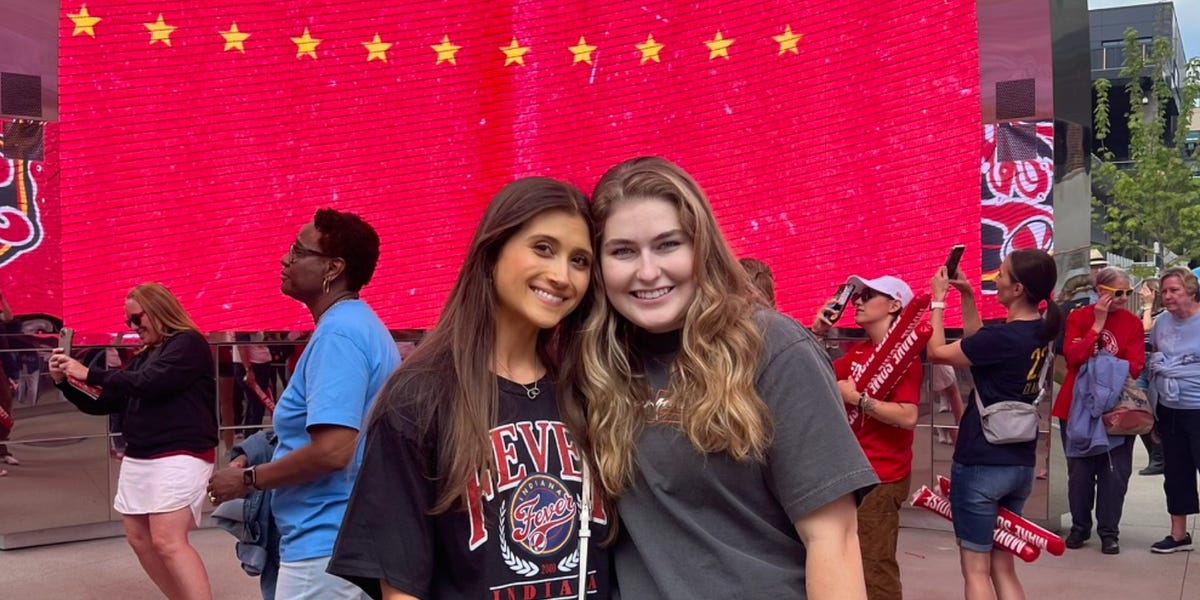
    The writer and her friend at a basketball game in Indianapolis.

    Indianapolis felt like home from day one.

    Savannah Born


    For me, the benefits of living here are much deeper than just a stretchy dollar. I’m flourishing, not just getting by, with enough time, energy, and money for what matters most to me.

    Real meaning came not from living out the 20-something dream in New York City, but from slowing down and realigning my priorities.

    I no longer feel trapped by rent payments and bank statements, but free — to travel, save, and spend on experiences that count. Free to handle emergency expenses and dine without guilt. Free to build my future without abandoning the present.

    Downsizing cities didn’t feel like a sacrifice, but a major upgrade. My lifestyle here allows me to put aside money for retirement, prioritize wellness, and see my loved ones regularly, with room to splurge on superfluous things that make me happy.

    As it turns out, I can have it all and then some.

    My midsize city may not have the prestige of Chicago or the iconic reputation of New York City, but living here has dramatically improved my quality of life.

    Living in Indianapolis still feels like a happiness cheat code.

    Source link

  • 4 Non-Coders Told BI What They Learned From Vibe Coding After Hours

    4 Non-Coders Told BI What They Learned From Vibe Coding After Hours

    For non-technical people, vibe coding is opening doors.

    When vibe coding took off earlier this year, many saw it as the domain of developers tinkering with tools. For a growing number of non-technical people, it’s become a way to finally bring an idea to life, improve their work processes, or carve out a creative side hustle.

    Four people told Business Insider how they built their apps after hours of work and parenting, and the lessons they learned along the way.

    The product designer who vibe coded a dog ID app


    Cynthia Chen

    Cynthia Chen built Dog-e-dex from scratch through vibe coding.

    Carolyn Fong for BI


    Cynthia Chen, a product designer, had dreamed for years of an app to catalog spotted dogs.

    In time free time over about two months, she built Dog-e-dex: an iOS app that lets users snap pictures of dogs, identify the breed, and save their profiles.

    The San Francisco-based designer with no formal engineering training had turned to platforms like Replit, ChatGPT, and Cursor. It wasn’t until she discovered Anthropic’s Claude in January that things started to click.

    She copied the code generated from Claude into Xcode — a tool for building apps on Apple devices — even when she didn’t fully understand how it worked. “It was like magic,” she said.

    “Every time I pressed the preview button, it was an exciting little gift opening,” she added.

    Chen said people who want to vibe code should treat prompting AI like “gentle parenting.”


    Cynthia Chen

    Cynthia Chen liked good prompting to “gentle parenting.”

    Carolyn Fong for BI


    “You have to be very intentional, very specific, and I think you have to be very nice,” she said.

    Sometimes, he needs to be “babied,” she said. When Claude got stuck, she broke down instructions step-by-step until she understood.

    The mother who built an app to help others emotionally reset

    When Karima Williams felt herself spiraling emotionally, she turned to Claude, which she said helped her process emotions she wasn’t ready to share with others.

    The 34-year-old mother from Maryland told Business Insider that talking to AI also helped her become a better parent. HE was her reset button, helping her decompress before stepping into mom mode.

    Seeing how useful Claude was for her own venting, Williams vibe coded a web app to help people offload and regulate their emotions.

    What worked was telling Claude to talk to her like she’s 10 or 15 years old, Williams said. Even if she didn’t know how to structure a product or set up a backend, Claude would walk her through what needed to be done.

    “I also tell her to tell me one thing at a time, because it can be overwhelming,” she added.

    Williams also said speaking to AI worked better than typing.

    “It makes it 10,000 times easier for me to say what I need to say and then get the context out,” she said, adding that she dictates to AI about 90% of the time.

    The accountant who vibes codes after his kids are in bed


    Wei Khian Chan

    After almost two decades in accounting, Wei Khjan Chan feared AI would take his job. To stay ahead, he picked up vibe coding.

    Amrita Chandras for BI


    For more than 18 years, Wei Khjan Chan worked as an accountant, a profession often considered vulnerable to automation.

    To stay ahead of the curve and make a bigger impact in his field, the audit partner at an accounting and advisory firm in Malaysia picked up vibe coding after attending coding workshops in June.

    “It’ll be great if I get to know AI earlier. At least I replace myself rather than let other people replace me,” the 39-year-old told Business Insider.

    Chan built a web app to speed up filing expense claims after business trips. Using AI-powered optical character recognition, it scans receipts and automatically exports them into the right files for his company’s finance teams.

    He also used AI to automate his workflow, such as generating invoices. “Without the vibe coding tools and the skill set, an accountant is unable to do this,” he said.

    Chan said that when he first started experimenting with AI, he was advised to write long, detailed prompts. But experience taught him that smaller, iterative steps work better.

    “The initial prompt is very important to set everything right,” he said. After that, when changes are needed, it’s more effective to adjust one small part at a time instead of piling on an entire wish list.


    Wei Khian Chan

    Wei Khjan Chan vibe-coded a web app to speed up filing expense claims.

    Amrita Chandras for BI


    For debugging, Chan watches if the error message changes — a sign that the AI ​​is working through the issue. If the same error persists, he resets the chat and reframes the request with fresh examples.

    Chan also said vibe coding doesn’t require endless hours of grinding. The father of two usually vibe codes after his kids go to bed, adding a feature here or refining a function there. Over time, it builds up, and the pieces eventually come together.

    “It’s like playing a game,” he said.

    The HR professional who said AI acts like a ‘young, over-enthusiastic intern’

    Laura Zaccaria, a Singapore-based HR professional, taught herself to build an AI-assisted web app while on maternity leave.

    The new mom signed up for a coding class in June and created a family meal planner.

    She vibe coded mostly in the evenings or when her baby was napping. On weekends, her husband took care of the baby while she worked.

    Zaccaria told Business Insider that learning vibe coding gave her confidence she could keep evolving as both a mother and a professional.

    When she was vibe coding, Zaccaria said she sometimes got stuck in a loop. AI can be like a young, over-enthusiastic intern, she added.

    “You need to know when to pause and ask yourself: Where was I not clear?” she said. “Sometimes it’s OK to scrap the whole conversation and start afresh.”

    “I realized I hadn’t phrased things properly, or I had asked for something too big. Then I’d have to break it down again,” she added.

    Do you have a story to share about vibe coding? Contact this reporter at [email protected].

    Source link

  • Best Party Schools 2026: the Top 10 Party Universities in the US

    Best Party Schools 2026: the Top 10 Party Universities in the US


    Students face countless questions when deciding where to go to college, from which schools offer the best classes to what kind of professional network they want to build.

    But for some, it also comes down to one thing: where they’ll have the most fun.

    This year, the University of California, Santa Barbara, is the place to be. It was ranked the No. 1 party school in the US for 2026 in a Niche ranking.

    Still, there are plenty of schools that know how to have a good time during homecoming and beyond.

    One school, the University of Miamihas a boat-burning ceremony in which scores of students gather around Lake Osceola in Coral Gables, Florida, to watch a boat set on fire as part of homecoming events.

    At another, Texas State Universitywhich has campuses in San Marcos and Round Rock, Texas, students engage in competitive games, such as the annual Soap Box Derby, where students build their own cars.

    Fall campus celebrations also boost local economies. Virginia’s Hampton University, for example, reported in 2024 that annual events, including homecoming and commencement, brought in more than $5.2 billion annually to the historically Black university.

    Every year, Niche publishes a list of the best party schools in the US as part of its annual best colleges list. To identify the top party schools, the site looks at student surveys of the party scene on campus, athletics and Greek life ratings, and access to bars and restaurants based on US Census data.

    As the future Class of 2030 starts weighing pros and cons for their top school picks, here’s a closer look at the top party schools in the US.

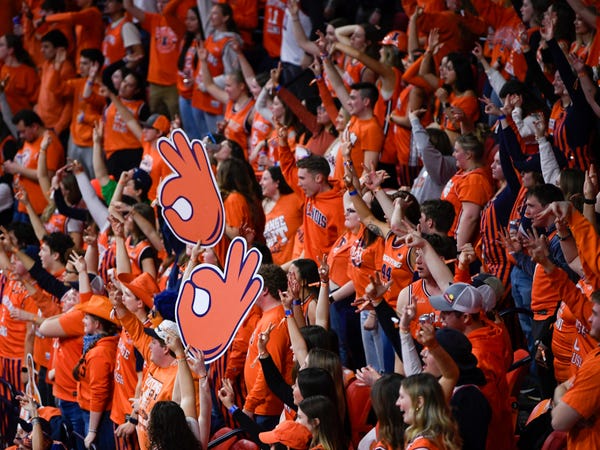
    10. University of Illinois Urbana-Champaign in Champaign, Illinois

    A crowd of fans at the University of Illinois Urbana-Champaign, all wearing orange.
    Fans at the University of Illinois Urbana-Champaign. Icon Sportswire/Icon Sportswire via Getty Images

    Famous for its party school reputation, the University of Illinois Urbana-Champaign was ranked as the 10th-best party school in the nation.

    The school, which is also ranked as the best public university in Illinois by Niche, has been ranked as a top party school repeatedly. In 2015, then university chancellor Phyllis Wise told CNN that the school was not proud of the label.

    Still, students enjoy a vibrant party culture, which includes the famous Unofficial Saint Patrick’s Day celebration during the first week of March, when students party through the weekend in an alternative to the traditional Saint Patrick’s Day, which falls during the school’s spring break.

    One student on Niche described the school as the “definition of study hard, party harder,” while another wrote that “the party scene is amazing,” and the school is “overall a great place to go to college if you are willing to be outgoing.”

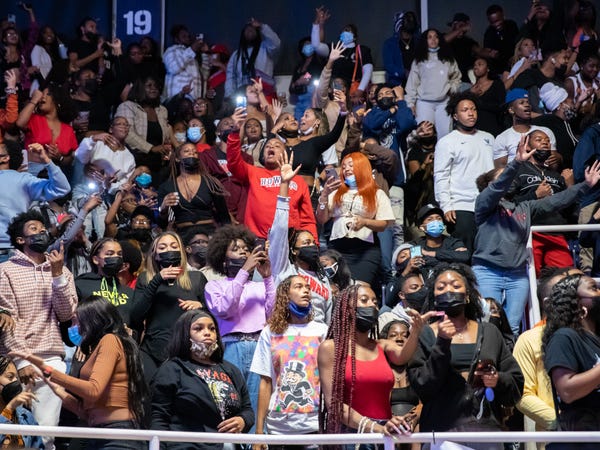
    9. Howard University in Washington, DC

    A crowd of college students cheering, some of whom are recording videos on their phones.
    Howard University’s homecoming. The Washington Post/The Washington Post via Getty Images

    The only historically Black university in the top-10 ranking, Howard University, was named the ninth-best party school in the US.

    Known as “The Mecca,” the school is the alma mater of key figures such as Supreme Court Justice Thurgood Marshall, but that doesn’t mean that students sacrifice fun for academics.

    The Washington, DC, school has a large and engaged Greek life scene. Some students attend “Thirsty Thursdays” parties or darties (day parties) between classes, The Root reported.

    “The good parties are off campus,” one student wrote on Niche. “If you’re not a party person, there are so many organizations to be a part of, so you will find your people.”

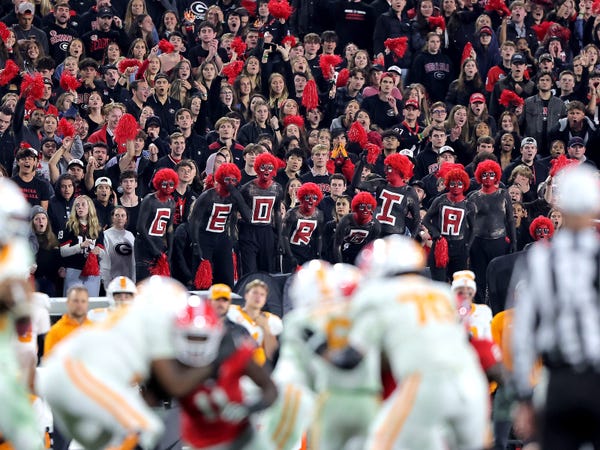
    8. University of Georgia in Athens, Georgia

    University of Georgia students, all dressed in black and red, watching a football game.
    University of Georgia student. Icon Sportswire/Icon Sportswire via Getty Images

    The University of Georgia in Athens, Georgia, was ranked the eighth-best party school in the nation. Last year, the school came sixth on Niche’s ranking, according to Augusta Chronicle.

    The school’s party reputation comes partly from its large Greek life scene, in which over 30% of enrolled students participate, the Red and Black student newspaper reported. The school also has a large football fan base, and every year, students and alumni celebrate homecoming with parades, tailgates, and other events.

    “Although the academics are hard, the party scene and friendships made will be worth it all,” one student wrote on Niche.

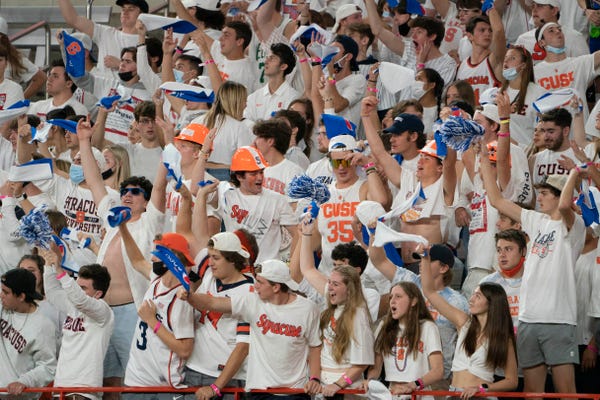
    7. Syracuse University in Syracuse, New York

    A crowd of Syracuse University students cheering. They're all dressed in white T-shirts with "Syracuse" written on them.
    Syracuse University student. Gregory Fisher/Icon Sportswire

    Syracuse University was ranked as the seventh top party school in the nation in Niche’s ranking.

    Before the COVID-19 pandemic, students marked the end of the school year with Mayfest, a celebration that featured performances and parties. While the tradition hasn’t returned, it has inspired different events at the end of the spring semester, such as 2023’s “Block Darty.”

    Even with changing traditions, Syracuse has received its party school reputation thanks to its large Greek life scene.

    In October, students celebrated homecoming with tailgates, networking events, and open house tours of campus buildings.

    “The party culture is very fun,” one student wrote on Niche, while another added that “the overall culture was overly centered around Greek life and partying.”

    6. University of Alabama in Tuscaloosa, Alabama

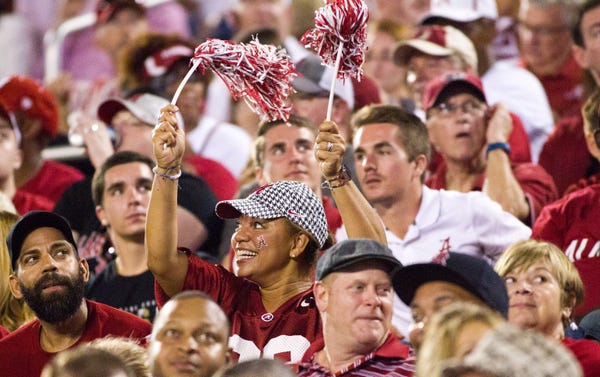
    A crowd of people wearing red football shirts, with one woman waving red and white pom-poms.
    University of Alabama fans. Jamie Lamor Thompson/Shutterstock

    Sixth on the list is this Southern institution, which enjoys a reputation as a top party school.

    With 71 social Greek life chapters, the school has been one of the nation’s largest fraternity and sorority communities in terms of active membership since 2021.

    “I have loved the first few weeks that I have been part of the UA community,” a university freshman wrote on Niche, adding that they’d “made connections with students from all over the country, and that has been an eye-opening experience for me.”

    This year’s homecoming theme is “Lights, Crimson, Action,” for the school website. The weeklong event, which kicks off on November 9, includes a pep rally, parade, and bonfire.

    5. University of Wisconsin Madison in Madison, Wisconsin

    Several students huddled together, cheering on for their college football team.
    University of Wisconsin Madison fans. Icon Sportswire/Dan Sanger/Getty Images

    The University of Wisconsin Madison was ranked fifth on the list.

    Students at UW Madison have access to various social activities, including ones that are recreational, leadership-based, or philanthropic. The school also has more than 60 Greek organizations.

    “There is a good campus life and downtown Madison is a great place for socializing and interacting with others,” one college junior wrote about the school on Niche. “Most people here want to see you succeed, and it is a very enjoyable experience.”

    4. University of Southern California in Los Angeles

    Students at the front row of a sports game, cheering.
    The University of Southern California. Icon Sportswire/Icon Sportswire via Getty Images

    One of two California schools on the list, the University of Southern California in Los Angeles, was ranked as the fourth-best party school in the US.

    The school, which has an acceptance rate of only 10% and comes with a $73,260 annual tuition price tag for the school’s websitehas one of the biggest college football teams in the western US.

    Each year, students welcome the Trojans back in Los Angeles during a weeklong homecoming celebration. Starting November 15, students and alumni are set to participate in celebratory tailgates and events.

    Part of the school’s party ranking is thanks to its large Greek life scene, which often hosts parties at fraternity houses, welcoming students and their parents, including Will Ferrell.

    “The social and party life is unmatched,” one student wrote on Niche.

    3. Tulane University in New Orleans

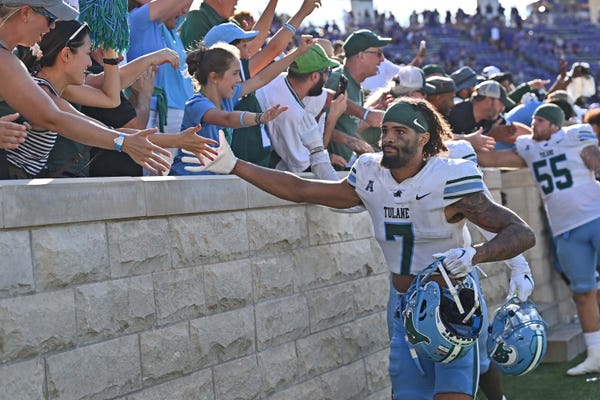
    A football player walking along a crowd and high-fiving people.
    Tulane University. Peter Aiken/Getty Images

    Tulane University, which The Wall Street Journal ranked the top party school last year, is the third party school on Niche’s 2026 list.

    Famous for its spirited campus atmosphere, especially during Mardi Gras, this New Orleans university enjoys its party-school reputation because of its location and front-row access to the city’s vibrant culture.

    In addition to off-site bars and eateries, the college has 25 Greek chapters and more than 200 social clubs, such as the Just Dance Club, the Improv Club, and even a crochet club.

    One college freshman summarized it best: “The school is the definition of work hard, play hard(er)!”

    2. Florida State University in Tallahassee, Florida

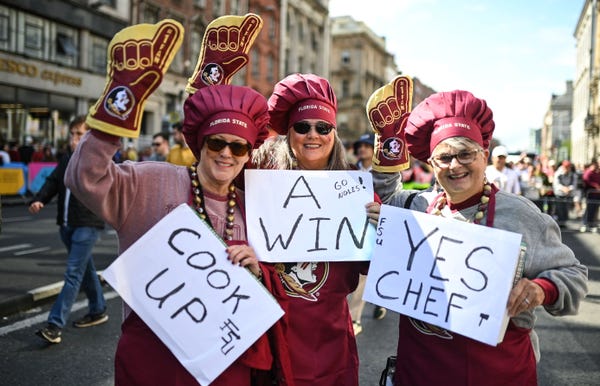
    Three women wearing Florida State merch, including chef hats and aprons, holding signs that say "cook up" "a win" and "yes chef."
    Florida State University supporters at a football game in Ireland. David Fitzgerald/Sportsfile/Getty Images

    The second-best party school is Florida State.

    Sports are a huge part of campus life, with many students supporting a variety of athletics, from football to golf. When they’re not rooting for their fellow classmates, students at FSU enjoy being part of the more than 700 clubs on campus.

    “FSU is a place that accommodates many lifestyles and types of people,” a college sophomore wrote on Niche, emphasizing that students with wide-ranging interests could enjoy themselves. “You can have an amazing time here without taking a sip of alcohol or ever going to any of the many nightclubs because there’s always something happening right on campus.”

    The college celebrated homecoming starting October 31. This year’s lineup included a reunion for alums, a parade, and tailgates.

    1. University of California, Santa Barbara, in Santa Barbara, California

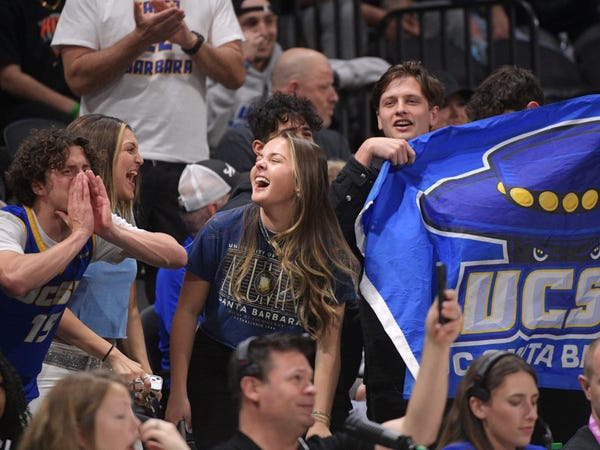
    Students laughing and cheering together at a sports game.
    Fans at the University of California, Santa Barbara. Sam Morris/Getty Images

    Topping the list is the University of California, Santa Barbara.

    Every year, the unsanctioned spring break party “Deltopia” attracts crowds to Isla Vista, a beach community near the college campus, the Los Angeles Times reported.

    “Don’t come here if you don’t like to party,” one student wrote on Niche, while another noted that “the work hard, party hard mentality is real here, but it keeps life balanced!”

    Instead of a traditional homecoming, the school hosts the All Gaucho Reunion for alumni in the spring. One of the major party holidays for the school in lieu of a traditional homecoming week is Halloween, when thousands of students flock to Isla Vista to party, for the Daily Nexusthe student newspaper at the school.


    Source link

  • The Starbucks Bearista Cup Launch Created a Red-Hot Resale Market

    The Starbucks Bearista Cup Launch Created a Red-Hot Resale Market

    For some diehard Starbucks fans, a $7 latte isn’t enough of a splurge — they’re ready to spend hundreds of dollars on the collectible holiday cup it comes in.

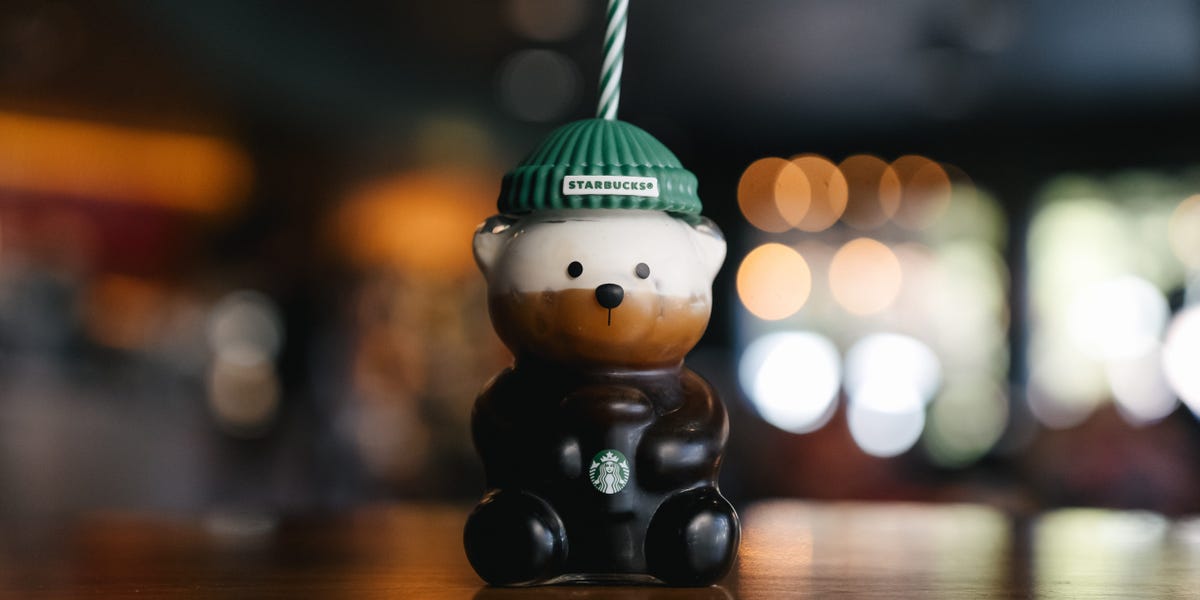
    Starbucks’ Glass Bearista Cold Cup, which launched and quickly sold out on Thursday at an original price point of $29.95, has evolved from festive holiday merch into an investment item, fueling a resale market usually reserved for designer sneakers and rare toys.

    Shortly after launch, eBay was flooded with listings for the beanie-wearing Bearista, with some cups listed with “Buy It Now” prices of up to $50,000. While it doesn’t appear that anyone has sold for such an exorbitant price, auction listings reviewed by Business Insider have racked up bids upwards of $285 (plus shipping).

    A representative for Starbucks told Business Insider the response to the Bearista cup “exceeded even our biggest expectations.”

    “Despite shipping more Bearista cups to coffeehouses than almost any other merchandise item this holiday season, the Bearista cup and some other items sold out fast,” the spokesperson said. “We know it’s disappointing to fans, and we’re sorry if they missed out. We appreciate our customers’ understanding. We have more exciting merchandise coming this holiday season.”

    The holiday spirit at Starbucks came with an extra side of scarcity this year, as some baristas who worked on launch day said their stores received just one or two Bearista cups to sell — and customers were lined up before opening, ready to claim one for themselves.

    The Starbucks spokesperson declined to comment on the number of Bearista units shipped out this year or stock levels at specific stores.

    A shift supervisor who has been with the company for over a year told Business Insider that customers lined up outside for more than half an hour before the store opened, and since they only received two Bearista cups to sell, they “sold out immediately.”

    “I got to my store somewhere between 3:45 and 3:50 am and there were already several people literally wrapped in blankets, camped out in front of the store,” a Minnesota-based barista who has worked with Starbucks for seven years told Business Insider. “When we tried to enter, after reminding them that the store does not open until 4:30 am, they tried to push their way in with us.”

    She added that, when her manager arrived at the store after 4 am and told the waiting customers there would be a limit of one bear-themed cup per party, the customers got angry and “cussed her out.”

    Starbucks’ collectible appeal

    The 2025 Bearista cup isn’t Starbucks’ first foray into collectible merch. The company first debuted its Bearista in 1997 in plush form and has since expanded into a wide variety of seasonal and themed merchandise, which customers regularly clamor for.


    Two 2016 "Bearist" plush toys from Starbucks.

    Starbucks debuted its Bearista items in 1997, starting with a plush toy, and has since expanded its offerings of collectible items with seasonal drops.

    Starbucks


    A Starbucks spokesperson told Business Insider that the policy for merchandise sales requires the items to be sold on a first-come, first-served basis, with no purchase limit or holds — meaning customers could buy more than one, and a staff member could not set aside an item with the intent to purchase it themselves, or save it for a customer.

    John Kauchick, a 70-year-old Starbucks fan in Mississippi who says he has spent “several thousand” dollars on collectible merchandise from the coffee giant over the last 25 years, told Business Insider he camped outside his local Starbucks starting at 3 am to get a chance at purchasing the bear, as well as some limited-edition Hello Kitty-themed merchandise also released on Thursday.

    Although he was first in line, Kauchick said a barista at the location he visited had purchased the store’s lone Bearista cup for herself before he had the opportunity to do so, which has irritated him enough to consider stopping his spending at Starbucks entirely.

    “I felt cheated out of the opportunity to get one,” Kauchick said. Although he has turned to resellers before, including spending $150 on a Taylor Swift-themed Starbucks tumbler he had been eyeing, he doesn’t want to keep feeding the secondary market, given the inflated prices.

    “I may get one,” he said, “But I have this bad taste in my mouth still, and I think I may decide I just can’t do this anymore.”

    A Labubu-level rush

    In the days since the launch, social media has been filled with celebratory posts from Starbucks fans showcasing their festive Bearista cups.

    The fervor is reminiscent of the craze surrounding cult items like Labubu dolls, which Business Insider reported in August were on track to hit a billion dollars in sales this year, and created a secondary market of people creating custom versions, including tattooed Labubus that sell for over $200 each, for the most committed fans of the brand.


    A screenshot of an eBay page showing Starbucks Bearista cups listed for $50,000.

    Some Starbucks “Bearista” cups are listed for as much as $50,000 on eBay.

    Katherine Tangalakis-Lippert


    For every post bragging about scoring one of the coveted cups, there’s another from an exhausted barista, publicly begging customers to understand that they have no personal control over the available inventory.

    Once the Bearista cups were sold out at her store, the Minnesota-based barista said some customers became aggressive, calling her and other staff “flat out disgusting” names. The vitriol continued well into Friday, she said.

    Another barista, who has worked at the company for 11 years, told Business Insider that “the phone wouldn’t stop ringing” all day Thursday, with customers calling to see if their store happened to have an extra Bearista on hand.

    “If customers were polite, I would apologize and direct them to the Target store where they might have a slim chance to get one,” they said, referencing licensed in-store cafés, which were rumored to have received more Bearista inventory than corporate-owned stores. “If they were rude and asked me if we had anything at 5 pm, I told them they already knew the answer.”

    Although some social media reports suggested that a handful of Starbucks fans became violent over the Bearista launch, Business Insider could not verify any such incidents. Still, it wouldn’t be the first time collectors threw punches over a popular item. In 2021, Target stopped stocking Pokémon, NFL, MLB, and NBA trading cards after their increasing resale value sparked fist fights in their stores.

    “I’m a bug for rarity, and one thing that Starbucks does is they build up the expectation or the perception of scarcity — and they do that on purpose,” Kauchick said. “I feel sorry for some of the people who got caught up in the hostility or whatever. But, you know, Starbucks knows what they’re doing.”

    Source link