الكاتب: admin

  • After My Dad Died, My Mom Moved in With Me — It Changed Everything

    After My Dad Died, My Mom Moved in With Me — It Changed Everything

    When I got the phone call that my dad had died, I knew that my life would change forever. What I didn’t anticipate was how much my mother’s next chapter in life would collide with mine.

    Not only did she lose her companion, but she lost her financial caretaker. I found myself emotionally and financially responsible for her. With housing costs on the rise, personal expenses piling up, and loneliness becoming her new reality, we made a decision that felt practical and compassionate: she would move in with me.

    It made sense financially

    For my mom and me, the decision was simple math. After becoming a widow, she was suddenly living on a fixed single income and could no longer afford her apartment. At the time, I was a single mom, so sharing a home was a practical choice.


    Mom and daughter posing for photo

    The author’s mother moved in with her after her father died.

    Courtesy of the author


    We combined our financial resources, and having her there meant extra help with the day-to-day. It was a win-win; we both saved money and gained a sense of stability and support.

    For many families, especially within the Latinx community, multigenerational living is not unusual; it’s a financial necessity.

    There are hidden costs to being part of the sandwich generation

    At 30, I found myself in the sandwich generation, a stage of life where young to middle-aged adults raise children while also caring for aging parents. Ten years later, my life is nothing like I pictured it. Yet, my experience is not unique. More and more millennials are finding themselves in this sandwich generation. But unlike older generations, we’re doing it under very different conditions: high living costs, fewer support systems, and the demands of a fast-paced world.

    On paper, it made total sense; splitting living expenses helped both of our finances. And most importantly, it ensured that my mom wasn’t navigating grief and aging alone. But the emotional and logistical reality of caring for a parent was far more complex than I’d imagined. What no one prepares you for is that the emotional costs of caregiving can outweigh the financial savings.

    Suddenly, I was responsible for scheduling her doctor’s appointments, managing her medications, and monitoring the changes in her mental well-being that started to decline after my dad passed. The role reversal hit me hard. Watching her fade from the caretaker she once was to someone in need of care broke my heart in unexpected ways.

    I also underestimated how much personal freedom I’d have to give up. As a mom and millennial who thrived on structure from balancing work, travel, and the comfort of solitude, my life shifted. Even small decisions felt weighed with responsibility. Can I take a trip without making detailed arrangements for her care? Is it selfish to want an evening to myself? Some days felt overwhelming. I just wanted to come home, curl up on the couch with my daughter, and not carry the emotional weight of caring for someone else.

    There are some unexpected silver linings

    Despite the challenges, there are moments of unexpected gratitude in our living arrangements. I get to share meals with my mom and connect in ways I wouldn’t otherwise have. When I’m drowning in deadlines, the simple gesture of her cooking dinner or watching over my daughter is a reminder that there is someone out there who cares. Plus, my daughter sees the bond shared and what family ties mean.

    Living together has also given me a deeper understanding of aging. I see firsthand how isolating it can be for elders, and how fragile our independence can become. It has made me more empathetic, grounded, and in some ways more resilient.


    Mom and daughter posing for photo

    The author’s mom has been living with her for a decade now.

    Courtesy of the author


    If there’s one thing this experience has taught me, it’s that multigenerational living isn’t just a financial decision, but it’s an emotional commitment. It takes more than careful budgeting; it requires boundaries, shared support, and grace for them and yourself.

    Caring for your parents doesn’t mean losing your own life.

    Rosa is a freelance writer and content creator based out of New Jersey. Connect on Instagram.

    Source link

  • Vote Now for Your Favorite Albums and Songs of 2025

    Vote Now for Your Favorite Albums and Songs of 2025

    Right now, Pitchfork’s editors are furiously debating the ranking of our year-end best albums and song lists, which we’ll be bringing to you soon. But first, we’d like to invite you to share your picks.

    Today, we’re opening the 2025 Readers’ Poll. Which albums and songs were your favorite? Tell us below. To make sure your vote is counted, please submit it by Sunday, November 30 at 11:59 pm Eastern. Check back for the results in the coming weeks. Thanks for participating—and thanks for reading.

    If you’re unable to see the survey below, you can also take it TIMES.

    Source link

  • Google Glass Is Still Around in 2019

    Google Glass Is Still Around in 2019

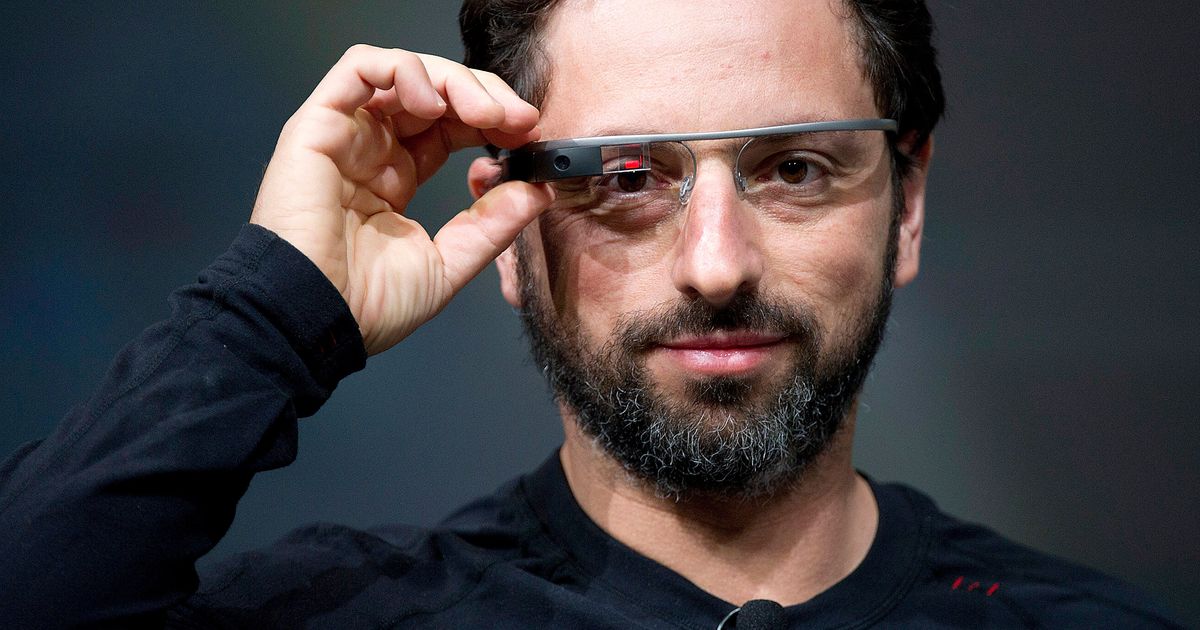
    Google’s Sergey Brin demonstrates Google Glass.
    Photo: David Paul Morris/Bloomberg via Getty Images

    When Google Glass was launched in 2013, it was supposed to be the future: lightweight AR glasses that could take photographs and give directions from the bridge of your nose. As you know — now that we’re in the future — it didn’t quite pan out. But calling it a total flop would seem unfair, too, given that in 2019, six years after the first prototype first appeared, Google Glass fans still haunt the internet — particularly on Reddit, where r/googleglass continues to see updates years after its namesake’s heyday has passed. Yes, there are still “glassholes.” And honestly? They’re pretty nice.

    A primer on Google Glass, in case you blinked and missed its cultural moment or just had better things to do in 2013. Google Glass officially launched that year, first to select developers and then to the general public. A pair retailed for $1,500, which is to say that owning a pair was something of a statement. It said, I can afford to spend an entire month’s rent on this piece of experimental technology and I feel no shame at your awareness of that fact since I’m wearing said technology on my face. My colleague, Intelligencer tech writer Jake Swearingen, once described wearing Google Glass as “looking like the world’s most gung ho laser-tag player.” It’s a description that has stuck with me. The image of the now much-maligned technologist Robert Scoble wearing his Google Glass in the shower has also stuck with me.

    It took all of two seconds for the world to declare the expensive, experimental device creepy. Certain wearers of the device were proclaimed “glassholes” — think the type of person you might have just called an “asshole,” now with AR-enabled frames slapped on their face. Somebody created a Wi-Fi jamming program, Glassholes.shspecifically to spite them. The deathwatch beetle chirped loud and fast for Google Glass. From the New York Timesin May 2013, months before Google Glass was even available for purchase:

    The glasses-like device, which allows users to access the Internet, take photos and film short snippets, has been pre-emptively banned by a Seattle bar. Large parts of Las Vegas will not welcome wearers. West Virginia legislators tried to make it illegal to use the gadget, known as Google Glass, while driving.

    Google tried its best to counter the accusations of creepiness. Google Glass requires speech or touch to be activated, which would ostensibly tip somebody around you off to its presence. If you wanted to film somebody, you had to be staring straight at them. But it wasn’t enough. People just weren’t ready for Google Glass. The same Times story references an incident at a programming conference in 2013 in which a female engineer tweeted a picture of a man she heard making an inappropriate joke. “She gave me no warning, she smiled while she snapped the pic and sealed my fate,” the man, who was later fired, said of the incident. Today, that interaction feels commonplace. Sure, it’s still uncomfortable and inappropriate to have your image blasted across the internet without your consent — see the gross saga of #PlaneBae — but we now operate in a world where a stranger using a device to surreptitiously snap pictures of you is just reality. Google Glass was just early to the party. Possibly still particularly creepy, but mostly early. Plus, it didn’t help that your everyday (or as everyday as somebody with $1,500 to burn on such a thing can be) Google Glass user wasn’t politely wandering around. They were, if the headlines are to be believed, in your face about it.

    In January 2015, Google announced, in a whisper, that the Glassholes’ reign of terror had ended: The company would no longer be developing Google Glass. That wasn’t the end of the wearable AR project, however. Google pivoted to the business sector; in 2017 it launched Glass Enterprise Edition for workplaces like factories. (In addition to modifications for workers, the device now has a red light, like those on video cameras, to indicate when it is recording.)

    And, as it turned out, it wasn’t the end of OG GG, either. Glassholes still exist, just not as boogeymen haunting the tech section of your newspaper. There’s a small group of fans still talking and updating and buying and selling on Reddit. Somebody who picked up a pair for $150 and wants help using the device to display sheet music; somebody with questions about installing an older operating system onto Glass Enterprise; another person looking for foldable frames; somebody else trying to fix a broken device; people looking to buy, as well as a number of people asking if it’s even worth it to spend any money on the now-defunct tech. (Spoilers: survey says it’s not.) There is also, weirdly, somebody asking if Google nixed Google Glass “because ‘someone’ was made aware of the book ‘The Circle’ by Dave Eggers?”

    Reading through the forum, it seems wrong to regard the dwindling frequenters of /r/googleglass as Glassholes. On the contrary, they seem to bust out their devices at incredibly appropriate moments. “I pretty much only use Glass for taking pictures/video while running/hiking or anywhere I don’t have access to a phone or don’t want to carry one,” writes one Redditor. “It’s a great way to capture highlights of a marathon, for instance, without having to stop and pull out a phone.” “Text notifications. Phone calls while driving, pix and video while on the go,” writes another. “I have used it for recording chemistry experiments and reaction set ups,” writes someone else. If you brainstormed words to describe these users, you’d probably come up with adjectives like “wholesome” or “nerdy.” Asshole-ish, or Glasshole-ish, would not be among them.

    Having spent some time sifting through posts from members of /r/googleglass, it has become clear that nobody there is using the devices on an especially frequent basis or trying to integrate the technology into their everyday life. “Personally, I dusted off my own to use on a vacation,” writes one user attempting to convince another not to bother buying the device. “If you plan to buy it as a relic of old tech, sure. To use? No, it’s not a good idea.” (Using Google Glass just to take photos and videos feels less in touch with the original AR vision and more akin to Snapchat’s Spectacles, sunglasses with a built-in camera.) At this point, owning Google Glass is like buying a vintage typewriter you have no intention of really using. You buy it to own it; to remember a specific moment in time — and, let’s be honest, to present yourself as the type of person who is concerned with remembering that specific moment in time — by keeping that moment on your shelf.

    Anyway, as one Redditor points out, using Google Glass requires a Google+ account. Google shuttered Google+ in October 2018 after a security flaw exposed the data of half a million people.

    Source link

  • Why Do Hotel Companies Have So Many Brands?

    Why Do Hotel Companies Have So Many Brands?


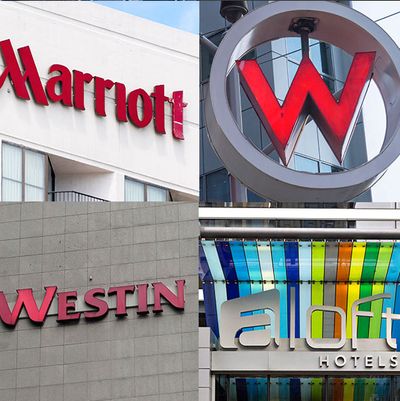
    These are all Marriott hotels. Photo: Getty Images

    In 2016, Marriott Hotels, which had 19 hotel brands, merged with Starwood, which had 11. They didn’t abolish any brands in the merger, and so the company faced a challenge: How to explain to customers, or even to its own employees, what makes all 30 of these brands different from each other.

    So shortly after the merger, the company produced this cutesy matrix:

    Don’t understand Marriott’s brands? Just check out the chart. They’re all either luxury, premium, or “select,” and they’re either classic (normal) or distinctive (quirky). Your regular Marriott is a “classic premium” hotel, while a hip W Hotel is “distinctive luxury,” and a value-priced Fairfield Inn is “classic select.”

    “It made no sense,” says Gary Leff, who writes the View From the Wing blog on the travel industry, of this chart.

    But the wealth of brands, and Marriott’s use of these terms to categorize them, persists, even if the matrix presentation does not. CEO Arne Sorenson has taken to calling the spaces occupied by similarly positioned Marriott brands “swim lanes”; as in a crowded pool, you may have to share one.

    “If you ask most average consumers, they will not be able to list the brands that belong to the different companies or necessarily tell you what the differences are,” says Makarand Mody, an assistant professor of hospitality marketing at the Boston University School of Hospitality Administration. “It’s becoming harder for these companies to develop brands that are clearly distinct from each other.”

    But is it really a problem to have so many brands? Marriott is, after all, the world’s leading hotel company. Two years after the merger, Marriott has shown it’s possible to live and thrive with 30 brands, even if your customers don’t really understand them all.

    This is because the hotel business is quite different from airlines or automobiles or other brand-centric industries. Hotel brands do matter. But they matter more to hotel owners than to hotel customers. And if customers form strong enough loyalty to an umbrella hotel brand like Marriott, they may never need to develop a clear grasp of the underlying brands; they can rely on the company to help them navigate.

    Marriott, like the other big hotel companies, owns very few of its own hotels these days. The hotel owners enter into multiyear contracts with companies like Marriott allowing them to use a specific brand.

    “If we had not merged with Starwood, would we be trying to build 30 brands from scratch?” Sorenson asked, rhetorically, on Marriott’s November 6, 2016, earnings call, the first after the Starwood merger closed. “I think the answer is probably not. At the same time, having done this deal, the 30 brands all exist. They all have substantial capital that has been invested in them, particularly by the hotel owners who have made deliberate bets about which flag they put on their hotels. And we don’t have the power to, nor the desire to, try and convince them that those bets have not been good bets.”

    That’s the first thing about Marriott’s brand challenge: It can’t easily get rid of any of its brands even if it wants to. The hotel owners won’t let them.

    Consider Sheraton, the first Marriott brand I’d probably put on the chopping block if I were king. In that odd matrix diagram, Sheraton is listed as a “classic premium” brand. It has a strong reputation in some foreign markets, but in the U.S. it faces a perception of uneven quality — perhaps an outdated perception, as Starwood and Marriott have long worked to upgrade or disaffiliate the dingier Sheraton properties.

    But besides the quality hiccups, Sheraton is not strongly distinguished from the flagship Marriott brand, which is also “classic premium.” So, is Sheraton necessary? Conceivably, Marriott could be better off with just one brand in this “swim lane,” in the same way that all of Hilton hotels that are like a Marriott or a Sheraton are just called “Hilton.”

    (Back in 2016, Hilton CEO Christopher Nassetta poked some light fun at Marriott for its excess of brands by echoing Sorenson’s “swim lane” terminology. “We are very focused on having pure-bred brands that are leaders in their individual segments, that have clearly defined swim lanes, that have premium market share and, as a consequence, help us drive industry leading organic net unit growth,” he said on an earnings call. “That’s our strategy. Others have taken different paths.”)

    But if all the Sheratons turned into Marriotts, you would have, for example, a Marriott LAX at 6101 West Century Boulevard in Los Angeles, and another one 1,000 feet away at 5855 West Century Boulevard. It’s not strictly true that you can’t have two same-flagged hotels so close together — before the 9/11 attack, the World Trade Center Marriott was nearly adjacent to the Marriott World Financial Center — but property owners understandably prefer to avoid the situation.

    Plus, reflagging a hotel is a much costlier proposition than repainting an airplane. To bring properties to a uniform brand standard, you might have to replace carpet and mattresses, even if these hadn’t reached the end of their useful life — not to mention the cost for new signage and stationery and printed napkins and pens. And properties that change their flag have to reintroduce themselves to customers under a new name. All of which is to say, Sorenson is right that hotel owners would stand in the way of a brand consolidation.

    Plus, the downside of having to present a large and confusing stable of brands to consumers is much smaller for a hotel company than it is for, say, an auto company.

    One of the main costs of operating several nameplates within one car company is that each must be marketed separately. The more brands GM has, the more television ads it has to run. But major hotel companies these days do very little marketing of their individual brands, focusing instead on building customer loyalty to the umbrella brand.

    “I think the principal model today is we go to market through our loyalty platform, through our dot-com site, through our app,” Sorenson said on that November 2016 earnings call. “And those things allow us to essentially market a portfolio, and offer through that portfolio an incredible range of choice to our customers, which drives, actually, conversion from looking to booking that much higher and makes the economics of each brand better, not weaker.”

    That is, Marriott doesn’t have to spend a lot of money to educate the public about, say, Moxy Hotels. Marriott can just spend money to convince people to book at Marriott.com, where it can show off all its brands at once, including Moxy.

    That cost-benefit analysis explains why a merged hotel company like Marriott wouldn’t hurry to shed weak brands in favor of stronger ones in the same “swim lane.” But the companies keep coming up with new brands, like Moxy Hotels, which you may have never heard of. Why is this relatively new brand necessary?

    Moxy is “a playground that attracts Fun Hunter travelers and is designed to give guests everything they want and nothing they don’t at an affordable price,” according to Marriott. Moxy hotels have small rooms, but they’re balanced out by lively common spaces that encourage interaction.

    Like Moxy, many of the newer brands exist somewhere in the “select service” space, offering fewer bells and whistles than a Marriott or a Hilton but more than a Fairfield Inn or a Hampton Inn. Maybe you don’t mind if your room is small, but you care a lot about the bed being comfortable. Perhaps you don’t need a bellman or a pool, but you definitely want a bar. Hotel companies are developing these new brand concepts with your preferences in mind.

    Makarand Mody says these new concepts are appealing to owners because they provide an excellent value proposition: They can be built and operated much more cheaply than traditional full-service hotels, because rooms are smaller and staffing levels are lower, but customers are often willing to pay nearly as much as they would for a full-service hotel room, especially in supply-constrained markets like Boston.

    Even Hilton, the company that’s proud of its restrained and clearly delineated portfolio of brands, announced in October that it will launch a 15th brand: Motto by Hilton, “a micro-hotel with an urban vibe in prime global locations.” The prototypical Motto hotel will have guest rooms of just 163 square feet, but those small rooms will be offset by lively public spaces meant to promote interaction. You can think of it as “Moxy, by Hilton.”

    Other brands exist to make it possible for the large hotel companies to integrate independent hotels that meet quality standards but don’t fit in a specific brand box. These are called “soft brands,” and Marriott has three of them: the Luxury Collection, which is luxurious; the Autograph Collection, which is at “the upper end of upper upscale”; and the Tribute Portfolio, which runs from “upscale into upper upscale.”

    Those latter two designations come from Brian Povinelli, who is Marriott’s senior vice-president and global brand leader for its “premium distinctive” full-service hotel brands, including the Autograph and Tribute groups, plus Westin, Renaissance, and Le Meridien. Part of Povinelli’s job is to help consumers, including me, understand what makes Marriott’s distinctive brands so distinctive, and to ensure the properties within the brands are living up to those distinctive expectations.

    I will confess that I’m not sure I see a clear distinction among Marriott’s three soft brands; before the merger, Starwood had two (just Luxury and Tribute) and Autograph seemed to be Marriott’s competitor to both of them; now all three brands live under one roof. But since a soft brand is soft, developing a clear identity is less important than with the “hard” brands. These are just nice, independent-looking hotels where you can earn Marriott points, and they’re an easy way for Marriott to grow its network.

    As for the hard brands, Westin has a clear strategy for distinctiveness: wellness. The “Heavenly Bed,” workout gear available to borrow, soothing pale-green tones: A Westin is supposed to leave you feeling rested and healthy. I don’t believe I’ve ever stayed at a Le Meridien, but these hotels are all supposed to have a European flair with “a very specific mid-century modern design aesthetic,” according to Povinelli. Each has a “master barista.” Surprisingly, he says the brand does especially well in middle-American markets like Indianapolis, Columbus, and Tampa.

    Where I have the greatest bone to pick with Marriott’s alleged distinctiveness is Renaissance.

    “It’s focused on that element of discovery and bringing the local neighborhood to life,” says Povinelli. This seems to be the official Marriott line: a Renaissance Hotel is “Business Unusual”; a full-service hotel, but more plugged-in and local. There’s even a “Navigator,” who can tell you where is cool to go in the area. (You may have heard of this service elsewhere, referred to as “concierge.”)

    I have stayed at the Renaissance Denver Stapleton hotel, which is an airport hotel that lost its airport, and I can’t say I was able to identify any local flair. There was a photograph of a ski hill in my guest room. On the other hand, the Mayflower in Washington, D.C., has so much local flair, it’s where Bill Clinton was photographed hugging Monica Lewinsky, where Eliot Spitzer became Client No. 9 in Room 871, and where Jeff Sessions had his forgettable encounter with then–Russian ambassador Sergey Kislyak.

    Maybe the Mayflower had too much local flair for its Renaissance flag; in 2015, the property transitioned to become a member of the Autograph Collection.

    All of which is to say, I can’t identify a clear through-line for Renaissance as a consumer. And if the unique brand proposition to the consumer isn’t obvious, it’s time to look for the proposition to the owner and the operator.

    “It’s a conversion brand,” says Leff, the travel-industry blogger. “They can reflag some other hotel and call it a Renaissance pretty easily.”

    Indeed, rather than calling it a hard brand, Renaissance might be best described as a “firm brand” that uses the frame of localism to allow for fairly wide stylistic variations across properties. A reasonably nice, full-service hotel can enter the Marriott network as a Renaissance without having to rip out and replace perfectly good fixtures like it might need to do in order to align with the brand standards for Marriott or Sheraton or Westin.

    When you start slicing the distinctions among hotels this thinly, you start to see why it might make sense for a company like Marriott to have 30 different brands. Or at least why it would be in no hurry to get rid of any of them. So what if it’s not clear exactly what a Renaissance Hotel is? It’s a full-service hotel that’s not exactly a Marriott or a Westin, and you can get your points there. If you’re an elite member, they’ll give you the late checkout you’re entitled to.

    Isn’t that what you were looking for anyway?

    Correction: An earlier version of this article incorrectly identified the Mayflower Hotel in Washington D.C. as a Renaissance hotel. It changed its flag from Renaissance to Marriott’s Autograph Collection in 2015.


    Source link
  • Who Is Ella Emhoff, Kamala Harris Stepdaughter with Doug?

    Who Is Ella Emhoff, Kamala Harris Stepdaughter with Doug?


    Mansur Gavriel 10 Year Anniversary

    Photo: Mike Coppola/Getty Images for Mansur Gavriel

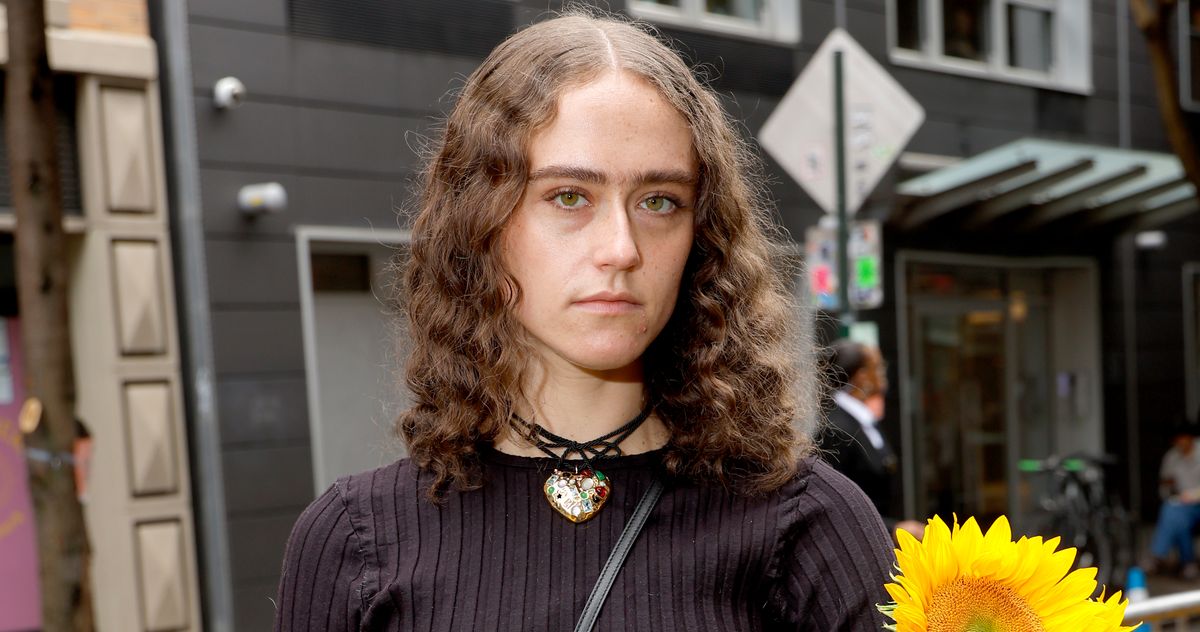
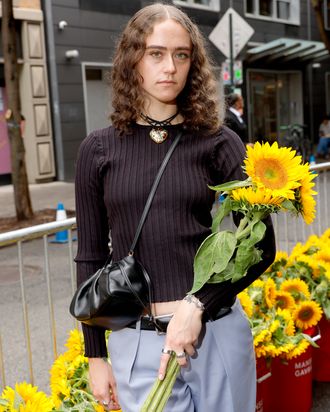
    When her stepmother Kamala Harris was sworn in as vice-president in 2021, Ella Emhoff was swiftly dubbed the First Daughter of Bushwick — a nod to her penchant for dressing like a liberal-arts-kid meme and the fact that she was at the time studying fashion at Parsons. Since then, she’s graduated, cemented her spot on the front lines of Fashion Week, and become a rising alt-fashion star who happens to visit the White House every so often. During Harris’s run for president, Emhoff has played a supportive role in her stepmother’s campaign, which has included defending Harris against conservatives who ridicule her alleged “childlessness.” In August, Emhoff brought a parade of characteristically crafty outfits to the DNC — an off-white Helmut Lang tank to round off her Harris-Walz hat, a Puppets and Puppets cookie purse to stash her disposable cameras — and took the stage on the last night in a Joe Ando drop-waist gown to talk about how Harris cared for her as a tween.

    Emhoff’s presence in Chicago also hit a nerve for conservatives, and not just because some of them have lost their minds over the fact Harris doesn’t have biological children. Her art-school-graduate-meets-Washington vibe has sent some people into a real tizzy — one panicked commentator took one look at her curly mullet and cow tattoos and concluded that she was “pretty much the nightmare scenario for most people with a daughter.”

    For those more concerned about, I don’t know, their daughters’ reproductive rights and bodily autonomy, it’s just as fun to see Emhoff step into Harris’s campaign as it is to see her on the runway. Here’s what to know about the fashion world’s favorite political family member.

    Ella grew up in LA, the daughter of entertainment lawyer Doug Emhoff and film producer Kerstin Emhoff. Her parents got divorced in 2008 when Ella was 9. She and her older brother, Cole, told the New York Times that the period after their parents got divorced involved Doug living in an apartment complex called the Palazzo and relying on Craigslist to get the kids homemade meals from strangers, since he didn’t know how to cook yet. Luckily for all, this time was “really bonding.”

    Also lucky: Kamala and her ease in the kitchen entered the picture about five years later. Doug and Kamala were set up on a blind date in 2012, and Ella has talked glowingly about her stepmother’s entry into the family — even for her preteen self. “Kamala came into my life when I was 14,” she said during her DNC speech, “famously a very easy time for a teenager. Like a lot of young people, I didn’t always understand what I was feeling, but no matter what, Kamala was always there for me. She was patient, caring, and always took me seriously.” Both kids recall being keyed into local politics and warning any friends who came over for dinner that they would be grilled about their ten-year plans.

    Also, they are one of those houses that call their dad by his first name, but only because, they say, like the word “Dad,” Doug is one syllable and begins with “D.” Kerstin is Mom.

    Although her father, Doug, has become the Biden administration’s — and the Harris-Walz’s campaign’s — leading voice on American Judaism and fighting antisemitism, Ella has been careful to publicly set herself apart. Responding to a sudden surge of interest from Jewish publications following Biden’s inauguration, a spokesperson told the press in 2021 that Ella is “not Jewish” because it’s “not something she grew up with.”

    After graduating high school in 2017, Ella decamped to New York to study fine arts at Parsons with a focus in apparel and textiles. (And yes, she really did live in Bushwick. She may still live there, but the Secret Service doesn’t want us to know that.) From the second she hit the Capitol steps in a bejeweled Miu Miu top coat, she’s been the most fashionable figure in politics — or, depending on how you look at it, the most politically connected woman in fashion. Barely a week after Biden’s inauguration, she signed with IMG Models; before long, she was popping up on Proenza Schouler’s and Balenciaga’s runways. By the time Biden’s first 100 days were up, Ella and her Secret Service detail were pretty much guaranteed front-row seats at Fashion Week.

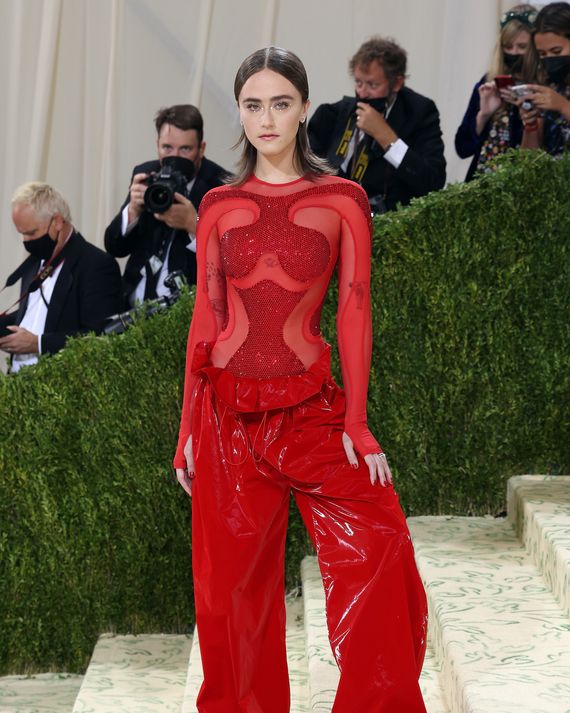
    At the 2021 Met Gala. Photo: Taylor Hill/WireImage

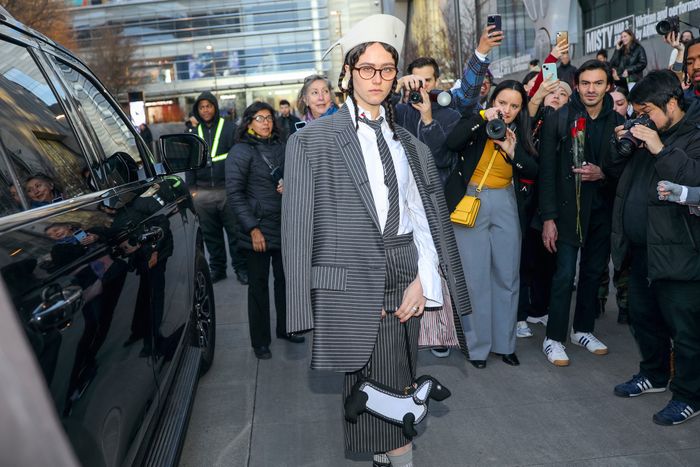
    Arriving at Thom Browne during NYFW 2023. Photo: Jose Perez/Bauer-Griffin/GC Images

    Although Emhoff has cited everything from vintage JCPenney to school uniforms nor her fashion influences, some considerations are more practical — her brother Cole told them Times that after Kerstin found out about one of her arm tattoos on Instagram, she “banks on wearing long sleeves when she needs to.”

    Sometime around the inauguration, Ella started dating GQ writer Sam Hine — a menswear boyfriend to go with all those Thom Browne kilts. They made a bunch of stylish appearances together at fashion week after-parties and even the Grand Prix. Hine and Emhoff have not been seen together in a while, and he seems to have disappeared from her Instagram feed, although neither of them has said anything publicly.

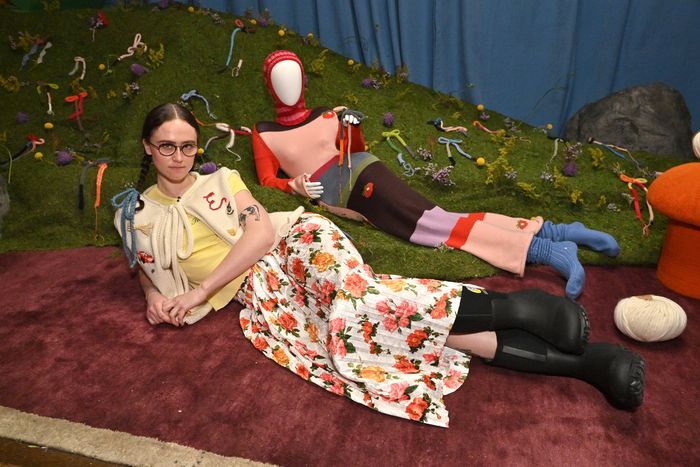
    Posing at her 2023 pop-up, “Ella Emhoff Likes to Knit.” Photo: Bryan Bedder/Getty Images for IMG Fashion

    If you haven’t noticed from her wide collection of yarn-based accessories, Emhoff is a big crafter. Much of her Instagram account is devoted to her crocheted art — she’s rendered cartoon animals, true dogs, wildlife, herselfand other bits of her sometimes-sponsored life via needle and yarn. She also showed a collection of knitted paintings at Gotham, a concept-store-slash-dispensary, in April, where some of her knit clothing was also for sale. She recently used some comically large yarn to crochet a basket for her dog, Jerry:

    Joe Ando, ​​the designer who made Emhoff’s DNC dress, said in another post that she crocheted the rosette on the arm of the dress herself, because of course she did.

    It’s not all so cutesy, though — Ella, who’s been knitting since she was 6 and learned to use a knitting machine while at Parsons, once told the Cut she has “full-on tendonitis” from all that needling, and has a level of muscle deterioration her doctor likened to “really old people.” Beauty is pain!

    Last fall, Emhoff also launched a knitting club, Soft Hands, which traveled around various trendy New York locations. She gave ticket-buyers a knitting 101 and let them gab, socialize, and swap tips. After a hiatus, the club recently returned in digital — and expanded — form. Emhoff turned it into a Substack dedicated to all things craft, where she announced that she’ll be filming video tutorials and putting together guides and lists about everything from knitting and pottery to mending and general DIY-ing for her subscribers. (There will also be a free version with less content.) It seems like a great place to learn more about Ella and also channel all your election anxiety into crocheting a cardigan.

    This post has been updated.


    Source link
  • Best Movies and TV (March 21–23)

    Best Movies and TV (March 21–23)


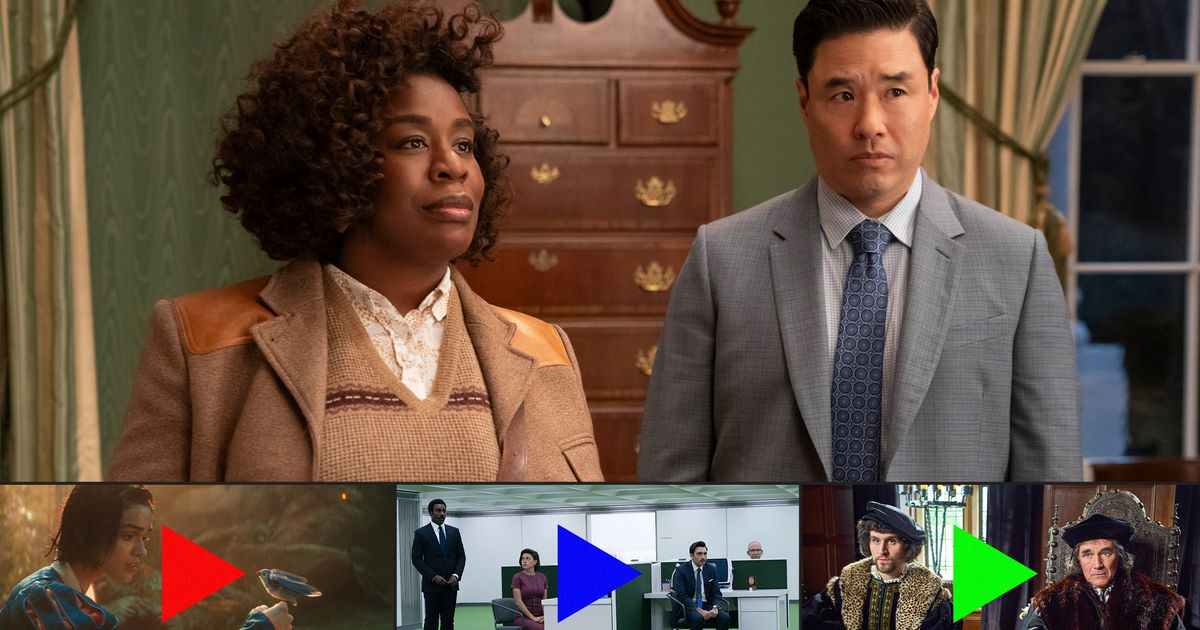
    Clockwise from top: The Residence, Wolf Hall: The Mirror and the Light, Severance season two, and Snow White. Photo-Illustration: Vulture; Photos: Erin Simkin/Netflix, Walt Disney Studios, Apple TV+, PBS

    Someday your recs will come. Someday you’ll know what’s new. And away to a theater you’ll go. To sit in a theater, you know (or a couch, I don’t know your watch habits). The in-theater selections are between a Disney princess (who doesn’t sing “Someday My Prince Will Come”) and two Robert De Niros, while the at-home streaming options are at least a few whodunnits.

    When the White House’s chief usher (Giancarlo Esposito) dies under mysterious circumstances during a State Dinner, world-famous eccentric detective Cordelia Cupp (Uzo Aduba) is on the case with a bumbling FBI special agent (Randall Park) as her ad hoc assistant, just trying to keep up. Everyone living and working in the president’s residence is a suspect, including Ken Marino, Jason Lee, Jane Curtin, and Susan Kelechi Watson. —Tolly Wright

    ➽ So, how many whodunnit tropes does The Residence stamp?

    As an adaptation of the Disney classic, Snow White feels like it dislikes its source material, eschewing most of the 1937 film’s memorable tunes for some new forgettable pop songs. As a story about a young woman trying to reclaim her father’s kingdom, it manages to work just enough. That’s due to Rachel Zegler, who shines as a Disney princess as she acts and sings circles around the rest of the cast, including Gal Gadot’s Evil Queen, who rules over the kingdom, sure, but she seems way more concerned with having gems and looking good at all times.

    ➽ After a long and controversial road to release, this movie can finally breathe.

    This cozy British mystery comedy has finally arrived Stateside. David Mitchell (Peep Show) plays John, a socially awkward puzzle-maker, who is thrust out of his comfortable, quiet life when his identical twin, James, a detective, goes missing. To uncover James’s whereabouts, John assumes his brother’s identity at the police station. John’s investigation gets derailed by a new murder each episode, but wouldn’t you know it, his puzzle skills prove him quite adept at solving whodunnits. —TW

    Mark Rylance and Damian Lewis return as Thomas Cromwell and Henry VIII in a continuing adaptation of Hilary Mantel’s stunning trilogy. The performances are the main reason to watch, especially Rylance’s Cromwell, but there’s at least one other draw: great hats. —Kathryn VanArendonk

    Warner Bros. couldn’t give us Coyote vs. Acmebut it is giving the world De Niro vs. De Niro organized crime.

    Annaleigh Ashford stars as a woman who learns that her father (Dennis Quaid) is the serial killer known as Happy Face. Developed by Jennifer Cacicio (Your Honor) and Robert and Michelle King (Evil), the series is inspired by a true story. — This is Chaney

    Ellen Pompeo and Mark Duplass star as Kristine and Michael Barnett, a couple who in real life adopted a child (played here by Imogen Faith Reid) with a rare form of dwarfism in 2010. The Barnetts, most likely inspired by the 2009 film Orphanbecame paranoid that their new daughter, Natalie Grace, wasn’t actually a young girl. They claimed she was 22 years old and essentially abandoned her. It became a hot-button case, so naturally, here’s a dodgy true-crime show about it.

    Photo-Illustration: Vulture; Photo: Nic Juarez

    There are a lot of questions that we hope Severance will answer by its season-two finale, but one we’re sure it’ll never address is paid. It’s a touchy subject, but really, how much is brain surgery worth? Well, thankfully, Nic Juarez dived into that crucial Severance mystery for us here. Then, tune in to the wild finale.

    Photo: Neon/Everett Collection

    The 2024 awards season is over, so clearly the streamers are ready to brag about adding some nominated/winning films to their libraries. You’ve got the season’s darling, Anora, on Huluwhich won Best Picture, and Best Actress for Mikey Madison, and notched filmmaker Sean Baker a record-breaking collection of four Oscars. There’s the Colman Domingo–led quiet knockout Sing Sing on Maxwhich totally deserved more buzz even in a crowded race. And who can forget about Wickednow holding space on Peacock.

    Want more? Read our recommendations from the week of March 14.


    Source link
  • For Good 4th Biggest Global Opening of 2025

    For Good 4th Biggest Global Opening of 2025

    Sex cardigans sell.
    Photo: Taylor Hill/WireImage

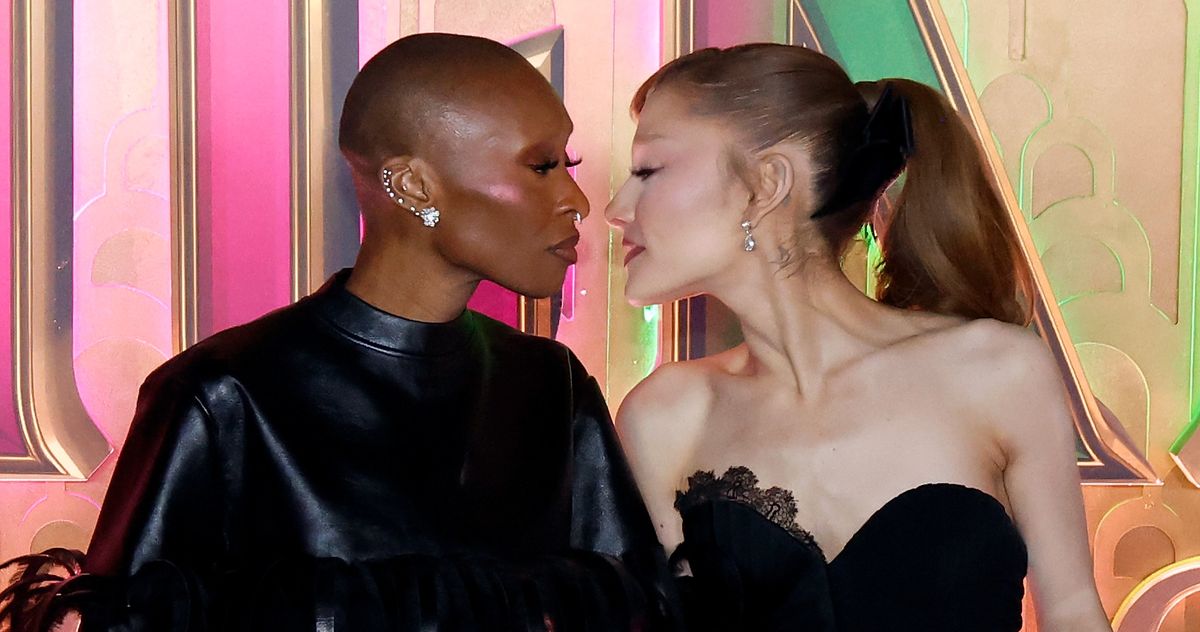
    Every day, people want to see more Wicked. Wicked: For Good entered the global box office at number 1, with $226 million in ticket sales around the world. It’s now the fourth biggest opening of 2025, after the live-action Lilo & Stitch ($341 million), Jurassic World Rebirth ($322 million), etc A Minecraft Movie ($313 million). Just behind Wicked: For Good are two more high-flying do-gooders, Superman ($220 million) and The Fantastic Four: First Steps ($218 million).

    150 million of those 226 million dollars were from the domestic box office. It was assumed that the second Wicked movie would enter the box office on top, but Ariana Grande is still saying thank you. On Instagram, she posted a letter thanking all the “Ozians” for making this movie a global phenomenon. “Whenever things get scary or you feel alone, home is wherever and with whomever we want it to be, and there’s no place like home,” she closed out her note, signing it “Your Glinda.”

    Elsewhere at the box office, things were a little less magical. Now You See Me: Now You Don’t had a 68% drop-off in its second week of release, with $9.1 million added to its domestic bo Predator: Badlands came it at number 3 with $6.25 million, said Edgar Wright’s Running Man with $5.8 million. Ending the top 5 was Brendan Fraser’s prestige weepy Rental Family with $3.3 million. This is also the first time in 5 weeks a Mason Thames movie was not in the domestic top 5. Regretting you is at number 7 this week, and The Black Phone 2 at 9. But hey, top 10 is still top 10.

    Source link

  • The Best ‘Friends’ Thanksgiving Episodes, Ranked

    The Best ‘Friends’ Thanksgiving Episodes, Ranked


    This article originally ran in 2018. Here it is again for this Thanksgiving so that you can watch TV with your family instead of discussing politics.

    While special holiday episodes are a sitcom institution, only a handful of shows can lay claim to specific celebrations. With nearly three dozen “Treehouse of Horror” anthologies, The Simpsons is the undisputed champion of Halloween episodes (with Roseanne close behind), and Bob’s Burgers has a nice collection of Valentine’s Day installments.

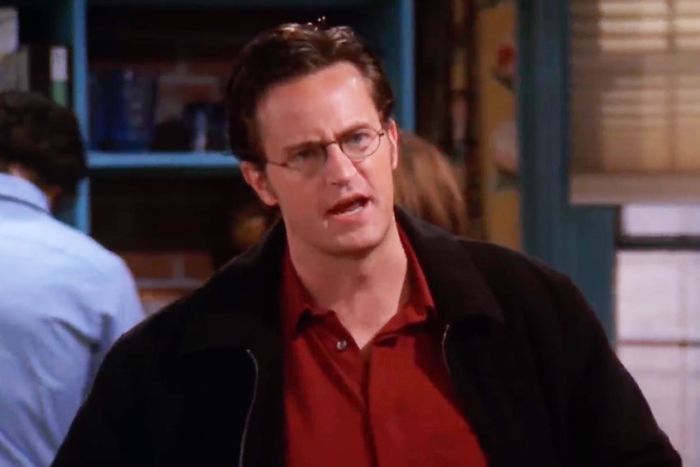
    But as far as Thanksgiving episodes go, Followers has the most and the best. Maybe they’re the only show to try it because no other show wants to earn itself an unfavorable comparison to the Central Perk Six — after all, almost every single one of the nine Thanksgiving episodes produced over the show’s ten-season run, 1994–2004 (what’s your problem, 1995?!), is an excellent Thanksgiving episode.

    This week, you’re going to need something to watch with your family on Thanksgiving that isn’t football, a parade, or a dog show, so here are the Thanksgiving episodes of Followers, ranked from least-best to most-best.

    All episodes of Followers are currently streaming on Max.

    Photo: NBC

    Any show is going to run out of steam and/or ideas by its ninth season. By 2002, Followers had explored most every possible Thanksgiving angle, except for the one that defines so many real-life Thanksgivings: family fighting. In this, the second-to-last time Followers would celebrate November’s most gluttonous holiday, Rachel’s obnoxious sister Amy (Christina Applegate) invites herself to Thanksgiving, and the conversation turns to who would get custody of baby Emma if Rachel and Ross died. Of course, they’ve already picked the most logical and obvious godparents: Chandler and Monica. Despite being just a recurring character and a terrible person, Amy isn’t happy with that decision, but then Chandler also gets mad because he learns that if Monica died after Ross and Rachel, then Jack and Judy Geller get Emma instead of him alone. It’s… a tear. I mean, does anybody really want to see the Followers friends fight and contemplate death?

    Photo: NBC

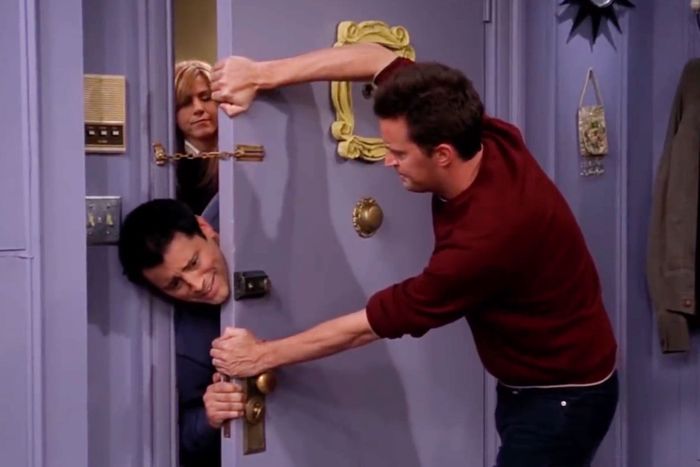
    After that morbid misstep in season nine, Followers writers turned it around a little for what they knew would be their last Thanksgiving episode, and, sadly, the last Thanksgiving all the friends would spend together. It lays the groundwork for the splintering of the group into different directions and locations by series end. That makes it just as depressing as “The One With Rachel’s Other Sister,” but it still ranks higher because of some genuine laughs and a major, poignant plot development. See, Monica and Chandler don’t even want to host Thanksgiving in their apartment, the main set of the show, but Phoebe convinces them that they have to. Thanksgiving-food-hating Chandler (he’s resented the holiday since childhood, when he learned of his parents’ divorce on that day) makes a big breakthrough by preparing cranberry sauce. B-plots involve Rachel and Phoebe entering Emma in a baby beauty pageant and Ross and Joey hitting a hockey game … which makes them all late for dinner, which in turn makes Monica and Chandler angry enough to lock everybody out of the apartment (although Joey gets his head stuck in the door, because he’s Joey). Of course, none of that matters when Chandler and Monica receive word — on Thanksgiving — that they’ve been selected to be adoptive parents.

    Photo: NBC

    Let’s be honest — Chandler isn’t all that likable. Not only does he make his displeasure with Thanksgiving so known that it sours the holiday for other people, but, as this episode informs us, the erstwhile Miss Chandler Bong hates dogs. That’s unforgivable. Still, this episode feels like a real Thanksgiving in that there’s just so much amusing, low-stakes stuff going on with so many different people. Phoebe’s sneaking a dog around (and Chandler bristles), smarty-pants Ross won’t allow himself to have a plate of Thanksgiving food until he can name all 50 states from memory, and Rachel has some relationship drama with dopey Tag.

    Photo: NBC

    Most of these Thanksgiving installments of Followers are what TV people call “bottle episodes” — everything takes place in a short period of time, and in one location, like, say, a huge apartment with a mirror on the peephole. In just its second Thanksgiving episode, Followers takes the action outside for a change (always a tricky prospect for a three-camera, live-in-front-of-a-studio-audience sitcom) so that the friends can do what so many families and friend groups do in reality: play a game of tag football. (Although, to be clear, it’s a weird, fake-looking game of tag football because it has to be presented on a tiny sitcom stage.) The episode wins points (that’s a football term) for solidifying one of Followers‘ best running bits: Monica’s intensely competitive nature. It’s so hilariously toxic that this here football game marks the first Thanksgiving pigskin she and Ross have played since she broke Ross’s nose in a family football game long ago (the sixth annual “Geller Cup”).

    Photo: NBC

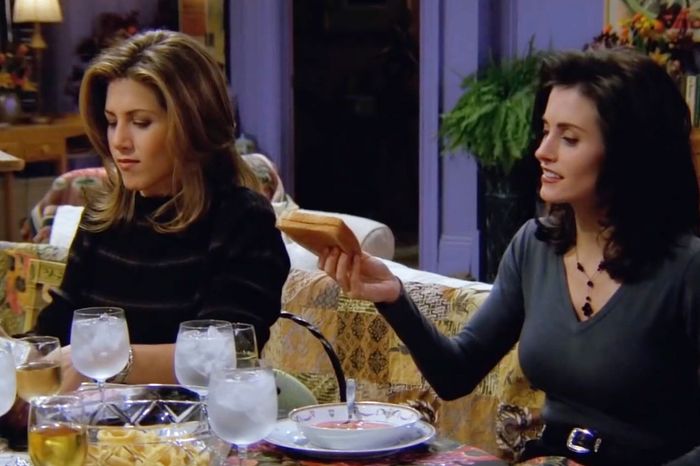
    I can’t prove it, but I’m going to go ahead and say that with this Thanksgiving episode of a show called Followers, both the concept and term “Friends-Giving” were simultaneously invented and popularized. Each year, there are so many articles about how an increasingly large percentage of the population opts to skip heading home and instead get together with their circle of friends for the traditional Thanksgiving feast. In this, the first Followers Thanksgiving, Monica and Ross are forced to celebrate the holiday on their own in the city because their parents went away on a trip. It’s also the episode where actor Joey finds out that he’s the face of VD, as he appears on posters all over the city bearing his image and the caption “What Mario isn’t telling you.” It gets even more zany: Ultimately, the Underdog balloon escapes the Thanksgiving Day Parade, and when the Friends go up on the roof to watch, they lock themselves out of the apartment and the dinner gets ruined. So, they eat cheese sandwiches courtesy of Chandler. And really, isn’t this what Thanksgiving is all about?

    Photo: NBC

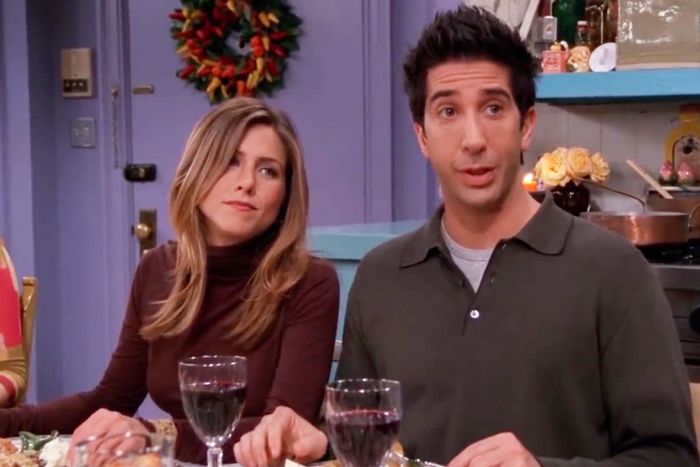
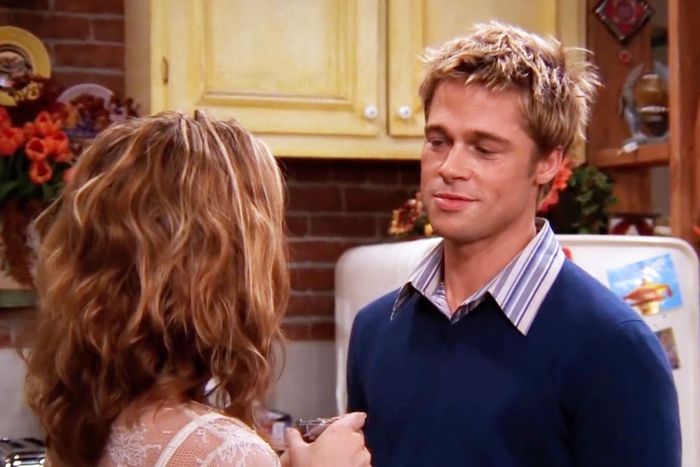
    With recent cultural strides, this episode can come off as problematic in much of its humor. But there’s also a lot of fun stuff “The One With the Rumor,” which, when it aired in 2001, was a major TV event and a triumph of stunt casting. Monica invites to dinner an old friend from high school, Will, who was an even bigger dork than Ross back in the day. Well, guess what: Since graduation, he got hot. Like, super hot — so attractive that he’s portrayed by Brad Pitt, who at the time was married to Followers star Jennifer Aniston. Will reveals that, because Rachel was so mean back in school, h was the one who started the rumor that she possessed both male and female sexual organs. Also, Ross helped spread the rumor, so that causes a rift between him and Rachel, who are currently on a break from hating each other. Elsewhere, Joey, “because he’s a Tribbiani,” tries to eat an entire turkey by himself, which is awesome.

    Photo: NBC

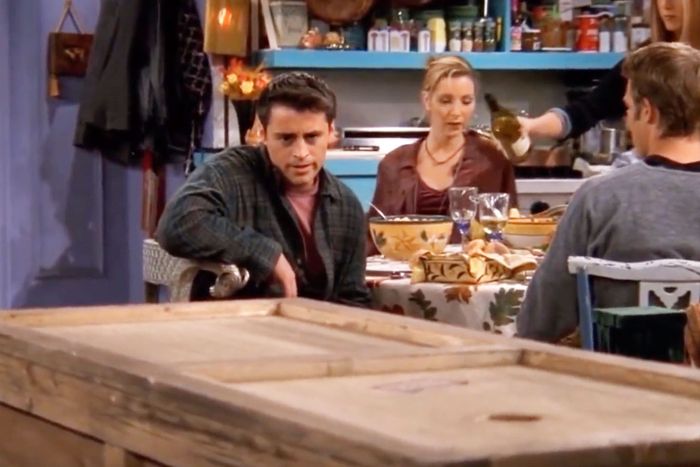
    In this Thanksgiving installment, everyone is having gross and/or strange love and sex problems, which manifest in a variety of plot breakthroughs, sight gags, and incest gags that make this episode of Followers feel like a toned-down ’90s version of Arrested Development. Among the weirdness: Monica gets into Tim Burke (Michael Vartan), the son of her old boyfriend Richard. Also weird: To punish Chandler for kissing his girlfriend, Joey makes his best friend and roommate spend six hours of Thanksgiving locked in a huge wooden box. It ranks so high because Chandler making jokes from a box for the entire episode is just so strange and funny.

    Photo: NBC

    They could have called this “The One Where Rachel Makes a Trifle But the Cookbook Pages Were Stuck Together, and She Makes an Unholy Combination of Shepherd’s Pie and Trifle Instead, and Joey Eats It Anyway, Because He’s Joey.” It’s got that, and that alone would be more than enough to land this episode high on the list. But there are so many other great elements as well, like how Phoebe briefly nurses a crush on Monica’s dad (onetime Hollywood dreamboat Elliott Gould), and how Ross has to admit to his parents that h was the one in college who smoked pot that one time, not Chandler, whom they hated because they thought he smoked pot in college that one time.

    Photo: NBC

    Also known as “The Flashback Episode,” this one is over and above the best because it’s packed not only with so many jokes, but also tons of Followers lore. We aren’t privy to much of the present-day Thanksgiving because everyone is so stuffed from another one of chef Monica’s legendary super suppers, so all they can do is reminiscence about their worst Thanksgivings. The episode then dives deep into a cornucopia of humiliation. We see the origin story of Chandler’s hatred of Thanksgiving (his parents announced their divorce at the table because his father was sleeping with the “houseboy,” just as that very houseboy cheerfully asks young Bing, “More turkey, Mr. Chandler?”). We see young-adult Monica attempt to seduce young-adult Chandler but instead accidentally cut off his toe, which somehow has never come up before on five seasons of Followers, and which also feels like some nice revenge for his many cracks at Monica’s expense when she was heavier. And, of course, we get both Monica and Joey with a turkey stuck on their heads. There is actually nothing funnier than a grown human with a turkey stuck on their head.


    Source link
  • Katie Hobbs’s Plan to Curb Development Is Good Water Policy

    Katie Hobbs’s Plan to Curb Development Is Good Water Policy

    Photo: Brian van der Brug/Los Angeles Times via Getty Images

    The sprawling neighborhoods chewing into the Sonoran Desert on the fringes of Phoenix are some of the fastest-growing communities in the country, adding 800,000 people to the metropolitan area over the past decade. But there isn’t enough water to sustain them, and last week Arizona’s leaders took the dramatic (but eminently necessary) step to restrict the construction of new homes in this region if the developers’ plans include relying on groundwater wells. With so many new developments pumping the precious resource from depleted aquifers, the state had no choice but to step in. “If we do nothing, we could face a 4 percent shortfall in groundwater supplies over the next 100 years,” Arizona governor Katie Hobbs said. “We have to close this gap.” After years of US leaders pledging to take sweeping action to protect their constituents from increasingly worsening climate disasters, Hobbs is now among the few who are seriously confronting the root of the issue — where we live and where we build (or, more accurately, where we don’t build).

    Current Arizona law requires that new developments must demonstrate they have access to a 100-year “assured” water supply, but new models have consistently shown that what was once “assured” is less so in an era of climate change. or comprehensive groundwater survey published earlier this year — previously buried by Republican leaders, and only unsealed after Democrats including Hobbs took control of the state government in January — includes dire projections for a fast-growing area northwest of Phoenix, warning that the state “cannot approve the development of subdivisions in the area that intends to rely on groundwater.” People living in water-insecure developments have already started to feel the impacts of what such a shortfall might look like. Last year, residents of some suburban Phoenix subdivisions were cut off by adjacent Scottsdale after the city — decimated by drought — was no longer able to sell them excess water from its own reserves. Homeowners in the unincorporated municipality of Rio Verde Foothills have been forced to buy water elsewhere, capture it from the sky, or consider $60,000 bids to dig their own wells (if their land is even geologically eligible). Residents who have been showering at the gym and eating from paper plates recently brought a lawsuit against the city to restore their water access. “Scottsdale has caused a humanitarian crisis for these residents and their families,” lawyer Dan Slavin told The Guardian.

    Despite the past winter’s record-breaking wet weather, even more reductions are coming. A sweeping new agreement between states and tribes that use Colorado River water was just signed last weekwith Arizona among the three states that have agreed to take 13 percent less through 2026. The deal, as historic as it is, still isn’t enough to prevent future cuts, which will almost certainly need to be made by the agriculture industry, which consumes about 74 percent of the state’s fresh-water supplies. But the Arizona government has signaled that it’s taking that situation more seriously, too. After an investigation by the new attorney general Kris Mayes (also a Democrat), the state recently revoked well permits for a Saudi-owned dairy company that’s drawing down the state’s groundwater to grow water-intensive alfalfa, a crop that is actually illegal to grow in Saudi Arabia due to their own drought restrictions.

    The availability of water in a region facing a forever drought isn’t the only limiting factor that’s shaping where Americans will be able to live long term. Last month, State Farm, the largest property insurer in the country, announced it would not take on new home-insurance clients in California due to increased wildfire risk. (Shortly after, it was revealed Allstate had quietly stopped writing new policies in California as well.) Affordable insurance is also harder to come by in states like Floridawhere sea-level rise threatens both coastal properties and the state’s fresh-water supplies due to saltwater intrusion. It’s a reminder that climate policy decisions will not only need to protect residents from destructive forces like wildfires, floods, and hurricanes, but also from less violent but equally urgent disasters like a slowly desiccating groundwater basin. And officials who won’t begin serious discussions about relocation — the loaded phrase is managed retreat — may end up having a climate disaster make the decision for them at a catastrophic and potentially deadly cost.

    What Arizona is proposing is not quite managed retreat — up to 80,000 under-construction homes in already-permitted subdivisions have still been given the green light to build — but what the new rules will do is send a strong message that the state will no longer be subsidizing sprawl at the expense of its own water security, as Sarah Porter, director of Arizona State University’s Kyl Center for Water Policy, told CNN: “It’s going to make it harder for developments to spring up on raw desert in the far-flung parts of town where developers like to develop.” This curtailing of new development — as well as the ongoing uncertainty for existing subdivisions scrambling to find reliable water sources — is also likely to raise home prices in a market where new buyers have flocked in search of cheaper housing. Which means that, as the unsustainability of Arizona’s desert suburbs or California’s fire-prone mansions or Florida’s oceanfront condos becomes increasingly clear, the need to invest in the places where we plow safely building new housing becomes equally urgent. As Hobbs notes, urbanized areas of Phoenix and other cities will not be affected by the state’s new groundwater policy because these places have planned for denser development along existing utility networks — where residents already use less water per capita.

    Source link

  • वावाया अस्तूरा किनेमा हैंदी दर्मंडरा

    वावाया अस्तूरा किनेमा हैंदी दर्मंडरा

    Indian actor Dharmendra, one of the most popular stars of Indian cinema, has passed away at the age of 89 at the age of 89.

    And the actor, who turned 90 years old on the 8th of January, has been in and out of the hospital in the financial capital of Mumbai for the past few weeks.

    Source link